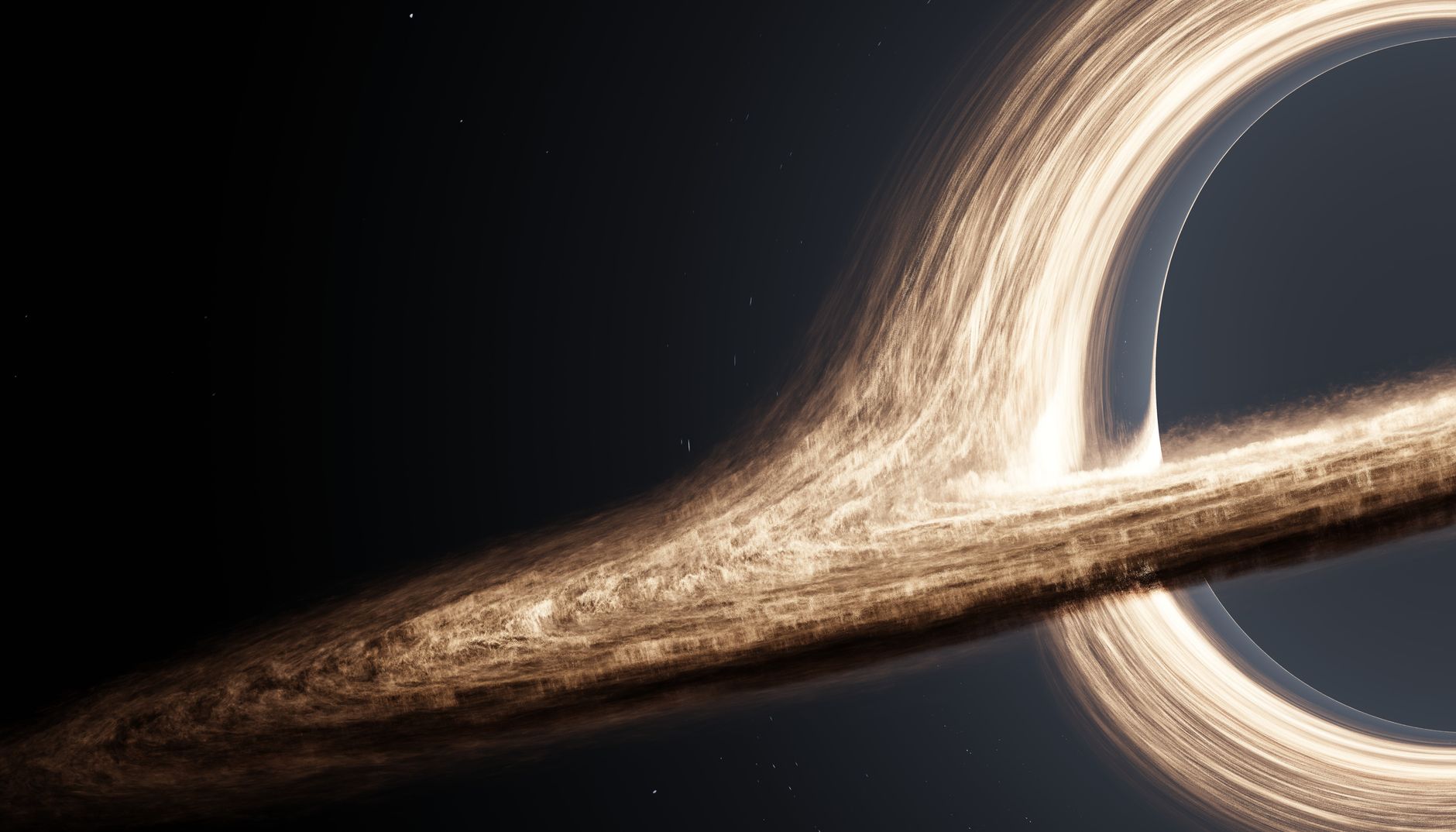
The night sky can look fixed to the human eye, but it is constantly changing. Stars brighten and fade, asteroids move across the Solar System, galaxies vary in brightness and distant stars end their lives in explosions. Much of astronomy has traditionally relied on detailed snapshots: images captured at a particular time and studied later.
Time-domain astronomy takes a different approach. It repeatedly observes the same parts of the sky to identify what has moved, appeared, brightened or faded since an earlier observation. Wide-field telescopes, large digital cameras and fast processing systems are making this work possible on a far larger scale.
The change is practical as well as scientific. Astronomy is increasingly dealing not only with maps of objects in space, but with a continuing stream of events that must be identified, ranked and sometimes observed again before they disappear.
What time-domain astronomy studies
A deep astronomical image can reveal faint galaxies and distant stars by gathering light over a long exposure or combining multiple observations. It may show extraordinary detail, but one image alone provides limited information about how an object changes.
Time-domain astronomy builds a sequence of observations. Survey telescopes return to the same regions over hours, days, months and years. Software compares a new image with a reference image and flags meaningful differences.
Those differences can include:
- Moving objects, including asteroids and comets;
- Variable stars, whose brightness changes regularly or irregularly;
- Transient events, such as supernovae, stellar flares and tidal disruption events, where a star is torn apart by a black hole;
- Active galaxies, whose brightness can vary as matter falls towards a supermassive black hole;
- Microlensing events, in which a foreground object briefly magnifies light from a more distant star.
Some phenomena can be followed for years. Others evolve quickly. Early observations of a stellar explosion, for example, may contain information about the star and its immediate surroundings that becomes harder to recover as the event develops.
Why astronomical surveys are changing now
Repeatedly photographing the sky is not new. The major change is scale. Modern wide-field telescopes can image large areas in a single exposure, while digital sensors and computing systems can compare new observations with earlier data quickly.
A possible change can be detected automatically, measured and distributed as an electronic alert before a researcher examines the original image. This makes sky monitoring a data-intensive scientific operation rather than a task that can be managed through manual inspection alone.
Existing surveys have shown the value of this model. The Zwicky Transient Facility, based at Palomar Observatory in California, has surveyed the northern sky for changing and moving sources since 2018. The Asteroid Terrestrial-impact Last Alert System, or ATLAS, uses a network of telescopes to search for near-Earth objects and other transient phenomena.
As surveys expand, the central challenge is not simply collecting more light. It is deciding which changes need further attention.
The Vera C. Rubin Observatory and the changing sky
The Vera C. Rubin Observatory in Chile is designed to be a major facility for this work. Its Legacy Survey of Space and Time, known as LSST, is intended to repeatedly survey much of the visible southern sky over a decade.
Rubin’s Simonyi Survey Telescope uses an 8.4-metre primary-tertiary mirror system and a 3,200-megapixel camera. Observatory documentation gives the camera a field of view of about 9.6 square degrees, roughly equivalent to 45 full Moons. The survey is designed to revisit large areas of the sky every few nights and observe through multiple filters, recording colour as well as changes in brightness.
Rubin released its first images in June 2025 after commissioning work. The start and detailed schedule of full survey operations depend on continued testing, calibration and operational readiness. Its scientific programme includes Solar System studies, research on the Milky Way, observations of changing cosmic sources and investigations related to dark matter and dark energy.
Rubin planning documents have estimated that the observatory could produce up to roughly 10 million alerts a night. These alerts are not confirmed discoveries. They are data packets indicating that image-processing systems found a source that moved or changed relative to earlier observations.
An alert is the start of an investigation
A newly detected point of light might be an asteroid, a variable star, a supernova, a satellite-related artefact or a known object behaving as expected. Sorting these possibilities is a classification problem too large for people to handle one image at a time.
This is where AI in astronomy, including machine-learning methods, can help. Automated systems can compare alerts with catalogues and known patterns, then rank them using features such as brightness, colour, position and the speed of a change. Their purpose is to help researchers find potentially important events within a much larger stream of routine observations.
Automation does not remove uncertainty. A system may identify an event as a likely supernova, but confirmation can require additional observations. Models can also perform poorly on rare or unfamiliar phenomena, which may resemble errors because they do not fit established categories.
Rubin’s planned alert system includes alert brokers: independently developed services that receive alert streams, add contextual information and help scientists filter events for particular research goals. One team may seek rapidly rising explosions, while another may focus on outer Solar System objects or changing active galaxies.
Why rapid follow-up matters
A wide-field survey can be the first instrument to notice an event, but it is rarely enough to explain it. A possible supernova may need spectroscopy, which separates light into wavelengths and can help identify chemical elements and measure motion. A suspected asteroid needs repeated observations to refine its orbit. An event near a black hole may require X-ray, radio or infrared observations.
This creates a chain of cooperation: a survey detects a change, an alert system distributes the information, researchers assess the candidate and follow-up facilities gather more detailed evidence. Coordination across countries, observatories and wavelengths is therefore central to time-domain astronomy.
The same principle is used in multi-messenger astronomy. After the LIGO and Virgo collaborations reported gravitational waves from a neutron-star merger in 2017, observatories around the world searched for and studied associated light. Faster sky surveys can support similar responses in the future, although follow-up telescope time will remain limited.
Asteroid detection requires repeated observations
Asteroid detection depends on observations over time. A single image may reveal a faint source, but multiple measurements are needed to establish that it is moving and to estimate its orbit.
Rubin is expected to increase the discovery rate for many small Solar System bodies because it combines depth with repeated coverage. It will not be a complete planetary-warning system. Whether an asteroid can be detected depends on its size, brightness, orbit and location in the sky. Objects approaching from the direction of the Sun are particularly difficult for ground-based optical telescopes to observe.
Ground-based surveys and space-based infrared missions address different parts of the detection problem. Effective warning depends on multiple instruments, repeated measurements and careful orbit calculations rather than on any one telescope.
The limits of the astronomy data flood
More data does not automatically produce equal access to discovery. Large astronomy data sets require computing infrastructure, technical expertise, archive access and opportunities to use follow-up telescopes. Researchers at well-funded institutions may have advantages in responding quickly to important alerts.
Surveys must also store images, maintain calibrated reference data, document processing decisions and keep archives usable for future researchers. Open-data policies can broaden participation, but they do not by themselves provide computing capacity or training.
Observational conditions also matter. Light pollution reduces the visibility of faint sources. Satellite constellations can leave streaks in images and complicate measurements, especially for surveys with wide fields of view. Observatories have developed methods to identify affected pixels, while astronomers and satellite operators have discussed ways to reduce satellite brightness. Such measures can reduce some effects but do not remove the challenge.
False alarms are another unavoidable part of sensitive surveys. Systems built to catch rare, short-lived events will also flag candidates that later prove to be ordinary sources or image artefacts. In a very large alert stream, unusual events may also be overlooked or misclassified.
Citizen science and public participation
Citizen science projects can help broaden engagement with survey data. Platforms such as Zooniverse have involved volunteers in tasks including galaxy classification and the inspection of changing astronomical sources.
In time-domain astronomy, volunteers may help inspect unusual images, compare light curves or identify patterns that automated systems have grouped imperfectly. They do not replace professional validation, but they can increase the number of people examining complex data.
Public access to alerts, archives and well-designed projects can also make scientific discovery more visible. Participation will still depend on the availability of understandable tools, training and reliable access to data.
What to watch next
The next phase of time-domain astronomy will depend as much on the systems around surveys as on the telescopes themselves. Important questions include:
- how Rubin’s survey operations and data products develop after commissioning;
- whether alert brokers make large alert streams useful to varied research communities;
- how effectively follow-up facilities coordinate across optical, infrared, radio, X-ray and gravitational-wave observations;
- whether new surveys improve the discovery and tracking of potentially hazardous asteroids;
- how observatories address satellite interference, data costs and unequal access to computing resources.
The important shift is not simply that telescopes can see farther or produce sharper images. Time-domain astronomy studies the universe as a set of processes: worlds moving, stars varying, galaxies flickering and violent events unfolding on timescales that demand rapid attention.
Astronomers have long mapped where objects are. Repeated sky surveys add another dimension to that map: how the universe changes while it is being observed.
Image by Adis Resic on Pexels.