Scientific discovery is becoming a robotics problem because many research questions involve search spaces, repetitive procedures and measurement volumes that are difficult to explore efficiently by hand. In response, laboratories are connecting robots, analytical instruments, data systems and machine-learning models into platforms that can select an experiment, perform it, measure the result and use that result to inform the next step.
These systems are often called self-driving laboratories. The term can imply more autonomy than most facilities have in practice: people still prepare samples, maintain instruments, troubleshoot failures and approve important decisions. Yet the underlying shift is real. Rather than using automation only to accelerate a fixed protocol, researchers are building closed-loop research systems that can adapt experimental choices as results arrive.
The promise is not that robots will replace scientists. It is that laboratories may test more possibilities while creating better records of what was attempted, what changed and how conclusions were reached.
What makes a laboratory “self-driving”?
Conventional laboratory automation has been used for decades. Liquid-handling robots dispense reagents, plate readers measure biological samples and automated instruments process batches of material. These tools can be valuable without deciding which experiment should happen next.
A self-driving laboratory adds an experimental decision loop. Its components commonly include:
- Robotic handling and preparation for moving samples, mixing materials, dispensing liquids or operating standardized workflows.
- Automated measurement through instruments that characterize a material, detect a reaction product, assess a biological response or record another outcome.
- Data pipelines that connect instrument output to experimental conditions and prepare it for analysis.
- Machine-learning or statistical models that estimate which untested conditions may improve a target property or reduce uncertainty.
- Workflow software and safety controls that schedule tasks, check constraints and account for instrument faults, sample degradation and incomplete results.
In an integrated system, researchers may define a goal such as improving conductivity, optimizing a battery-related property, identifying reaction conditions with a desired yield or prioritizing biological conditions for study. The platform runs an initial set of experiments, updates its model from the results and proposes subsequent experiments.
There is no single fixed definition of a self-driving laboratory. The usual distinction from ordinary automation is autonomous experimentation: the system does not only execute a predetermined queue. It uses observations to revise that queue.
Why the trend is accelerating
Several developments have made this approach more practical. Laboratory robots, sensors and data storage are more widely available, while many instruments now produce structured digital data rather than records that must be manually transcribed. Software can also connect equipment that was once operated as separate systems.
Advances in optimization and machine learning in science offer methods for choosing experiments when each one is costly or slow. Bayesian optimization and active learning are particularly relevant in these settings. Rather than testing every possible combination, a model can balance conditions that appear promising with conditions that may reveal weaknesses in its current understanding.
Other methods can be useful for sequential decisions. Reinforcement learning, for example, can frame a workflow as a series of choices with delayed outcomes. It is not a universal solution, however. In laboratory settings, the quality of measurements, experimental constraints and workflow design may matter more than the algorithm’s label.
The pressure to search efficiently is especially strong in chemistry, biology and materials science. A material may involve many possible ingredients, ratios, processing temperatures and fabrication conditions. A chemical route can vary by solvent, catalyst, concentration and reaction time. Biological experiments add variation among cells, reagents and environmental conditions. Most research groups cannot test more than a small portion of these possibilities manually.
Where robotic laboratories are being used
Materials and battery research
Materials science is a natural setting for closed-loop research because many projects seek combinations with measurable target properties. Robotic systems can prepare candidate compositions, process them under controlled conditions and send them to characterization instruments. A model can then recommend later compositions or processing parameters.
Battery research presents a related case. Electrochemical performance depends not only on ingredients, but also on formulation, processing, cycling conditions and measurement choices. Automated platforms can help researchers explore these interdependent variables more systematically. But rapid screening is not the same as demonstrating that a candidate will perform reliably in manufacturing or under independent testing.
Chemical synthesis
In chemistry, integrated systems can combine reagent dispensing, reaction setup, purification and analysis. They may optimize a known reaction, identify workable conditions for a transformation or explore a set of possible molecular structures. Automation is particularly useful when repetitive setup limits the number of conditions a chemist can evaluate.
Chemistry also shows why experiments cannot be treated as simple software tasks. Reactions can create unexpected mixtures, solids can clog lines, samples can be contaminated and analytical readings can be ambiguous. A reliable robotic workflow must record failed runs and uncertain measurements rather than treating every output as trustworthy data.
Biological experimentation
Biology has long used automation for high-throughput screening, sequencing workflows and routine liquid handling. More autonomous systems can use measurements from one experimental round to prioritize the next. They may help when researchers are optimizing culture conditions, screening biological responses or mapping the effects of multiple variables.
Living systems remain highly variable. Results can depend on cell state, reagent batches, timing, incubation conditions and handling history. An automated platform can generate observations quickly, but it cannot eliminate biological variability or determine on its own whether a result will generalize beyond the original experimental context.
Speed is useful, but reliability is the real test
The clearest benefit of robotic laboratories is throughput. Systems can repeat standardized actions with less manual work, operate beyond ordinary working hours when appropriately supervised and create structured records during the workflow. They can also make comparisons across many conditions easier when procedures are consistent.
Consistency should not be confused with reproducibility. A robot may repeat its motion precisely while an instrument drifts, a reagent changes or an unrecorded software setting affects the result. Reproducibility depends on the full experimental context, including calibration history, sample provenance, environmental conditions, software versions, data-processing steps and rules for excluding failed measurements.
For that reason, one of the most valuable outputs of a robotic laboratory may be a structured experimental record: what was attempted, what failed, what changed between runs, what was measured and how conclusions were drawn. Without such records, automation can accelerate the production of results that others cannot fully inspect or reproduce.
The black-box and data-quality problems
AI scientific discovery is sometimes discussed as though prediction and explanation are the same thing. They are not. A model may identify conditions associated with a desired result without explaining the mechanism behind that result.
Prediction can still be useful. It can guide expensive experiments and identify candidates worth deeper study. But an optimized result is not automatically a scientific explanation. Follow-up experiments, theory and independent measurement may be needed to determine whether a pattern reflects a causal mechanism, a hidden confounder or a feature of the original dataset.
Data volume does not solve this problem. Automated experiments can produce large quantities of measurements, but a system is only as useful as its objectives and observations. If it measures the wrong proxy, it may efficiently optimize the wrong property. If early data cover only a narrow region of the search space, later recommendations may reinforce that bias. If negative or failed experiments are discarded without careful treatment, a model can learn an unrealistically tidy version of laboratory reality.
Good system design requires more than a predictive model. It requires quality-control checks, uncertainty estimates, versioned software, transparent decision criteria and procedures for identifying when the system is extrapolating beyond available evidence.
What humans still do
As robotic laboratories take over parts of experimental execution, human work shifts rather than disappears. Scientists define meaningful objectives, choose constraints, assess whether a measurement represents the phenomenon of interest and decide when an unexpected result deserves investigation rather than rejection.
They also make judgments that are difficult to reduce to a single optimization target. Is a modest performance improvement scientifically important? Is a finding robust enough to justify a costly follow-up? Does a project address a worthwhile question, or simply one that is easy to measure? These are decisions about scientific significance, not failures of automation.
The practical result is likely to be hybrid teams in which domain scientists, roboticists, software engineers, data specialists and instrument experts share responsibility for research workflows. Useful training extends beyond coding and machine learning to experimental design, measurement science, data stewardship and safety.
Discovery becomes the design of a system
The durable change is not that laboratories will become empty rooms run by algorithms. It is that the unit of scientific work is expanding. Instead of designing one experiment at a time, researchers are designing systems that determine which experiments are run, how results are validated and when the loop should stop.
A fast platform that produces an intriguing candidate can be useful. A platform that records its decisions, identifies its limitations, supports independent replication and helps researchers investigate why a result occurred is more valuable. The future laboratory will be judged by more than speed: its discoveries must remain intelligible, reproducible and useful after the robots move on to the next experiment.
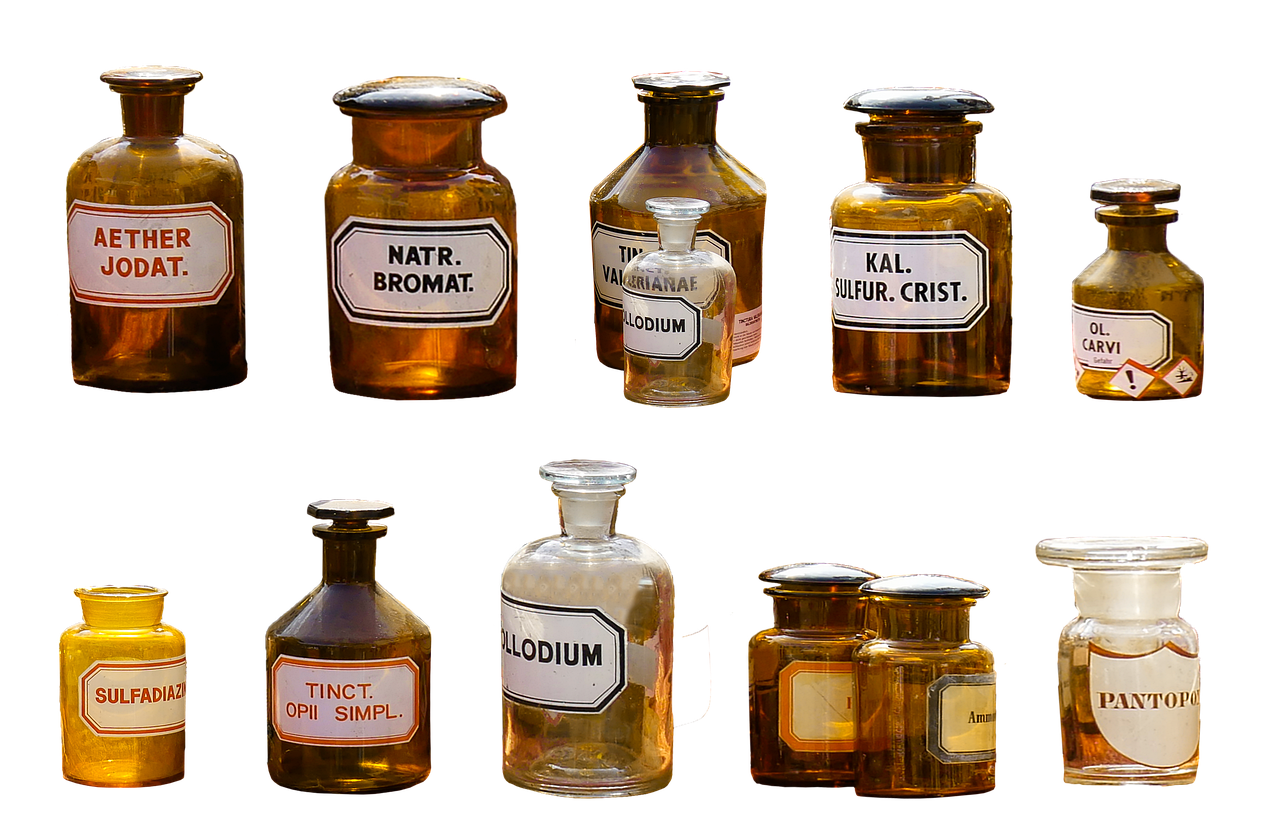
Image by garten-gg on Pixabay.