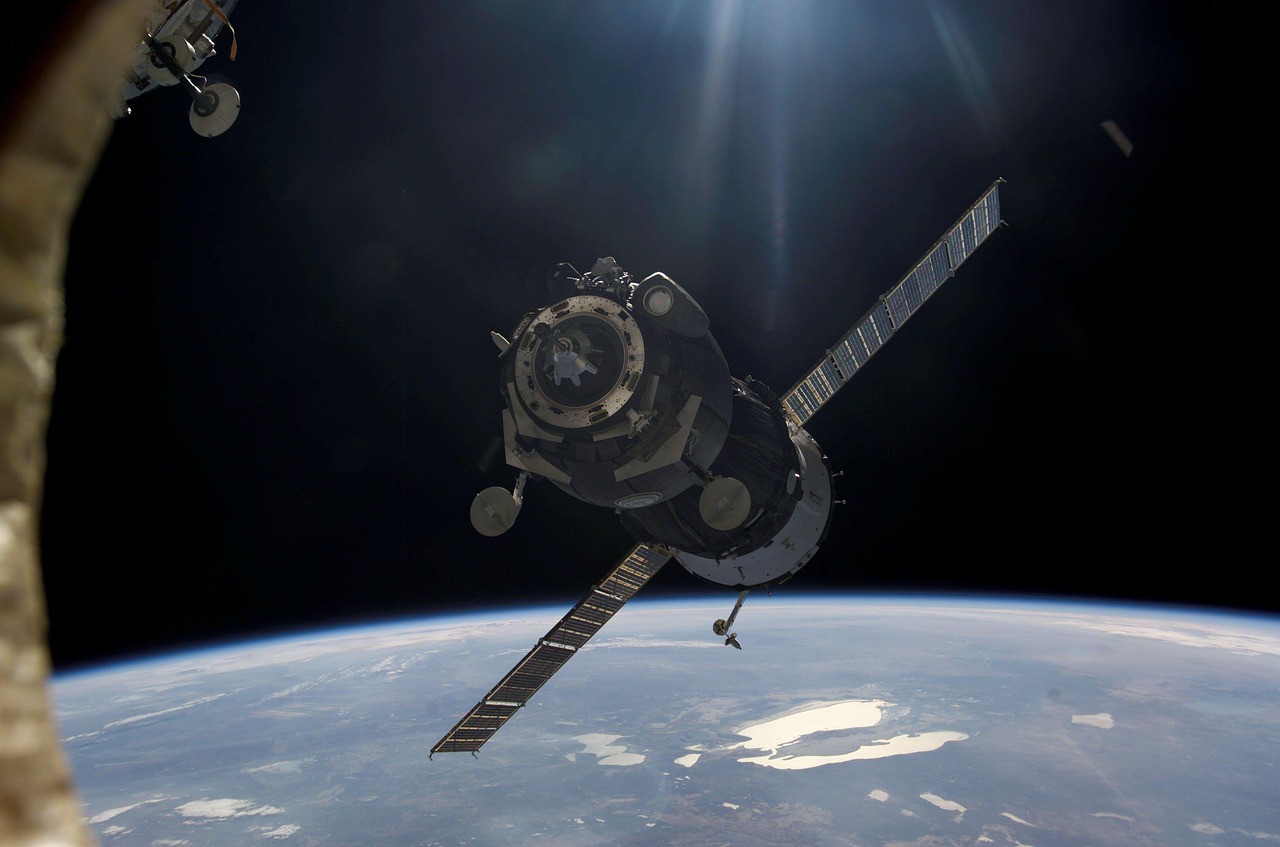
The decisive contest in the modern space economy may not be over who launches the most rockets or deploys the largest satellite constellations. It may be over who can reliably receive, process, protect and distribute the information those spacecraft generate.
Satellites are often presented as self-contained machines operating high above the planet. In practice, they are endpoints in a far larger system. A spacecraft can collect an image, relay an emergency message or measure a changing atmosphere, but that work has limited value until data reaches Earth, is interpreted and reaches a person or system able to act on it. That makes satellite ground stations, terrestrial networks and data-processing platforms central to the next phase of space competition.
As satellite constellations grow and instruments produce richer streams of imagery, communications and scientific measurements, the ground segment is becoming a strategic bottleneck. The winners will not necessarily be the organizations with the most hardware in orbit. They may be the ones that can turn an orbital observation into reliable, timely and usable information on the ground.
The largely invisible system beneath every spacecraft
The term ground segment space systems covers much more than the familiar image of a giant dish in a remote field. It includes tracking, telemetry and command antennas; mission-control software; radio-frequency equipment; data centers; cloud platforms; cybersecurity tools; terrestrial fiber links; and the teams that operate them.
When a satellite passes within view of a conventional ground station, an antenna establishes a radio link. Operators can send commands upward while receiving telemetry about the spacecraft’s health and downloading mission data. For an Earth-observation satellite, that data may include imagery. For a weather satellite, it may be atmospheric measurements. For a communications satellite, the ground facility may be part of the service itself, connecting traffic between space and the terrestrial internet.
The antenna is therefore only one handoff point. Data typically travels onward through terrestrial backhaul networks to storage, processing and distribution systems. It may be calibrated, combined with other data sets, analyzed by software and delivered to a government agency, a shipping operator, a farm-management service or a consumer broadband network.
That chain explains why space capacity cannot be assessed by counting satellites alone. A powerful sensor with too little downlink access can be constrained by its ability to empty onboard storage. A broadband constellation without enough gateways and backhaul can struggle to deliver its theoretical capacity. A mission-control network that lacks redundancy can become a single point of failure.
More satellites mean more demand for contact time and computing
Earth orbit is more populated than it was even a decade ago, largely because launch costs have fallen and operators have deployed large fleets of relatively small satellites. Communications constellations account for much of that growth, but weather, Earth observation, science, navigation and defense missions also depend on growing volumes of data.
Higher-resolution instruments, more frequent observations and wider sensor coverage all increase the pressure on space data infrastructure. A satellite cannot continuously transmit to a single site as it circles the Earth. It needs access to a network of stations spread across suitable locations, or it needs a way to pass data through other satellites until a useful downlink becomes available.
For some missions, speed matters as much as total capacity. A wildfire image is most valuable while emergency managers can still redirect resources. A maritime alert is more useful before a vessel has moved far from its reported position. Weather observations have to enter forecasting models quickly enough to improve a forecast, rather than merely document what happened.
This is why the ground segment increasingly resembles a distributed digital utility. It must provide capacity, geographic reach, low-delay routing, resilient operations and a way to convert raw transmissions into useful products. It also has to scale as spacecraft fleets and customer demand change.
From dedicated dishes to shared, software-defined networks
Traditionally, many satellite operators built and maintained their own dedicated ground facilities. That approach still makes sense for some national-security, scientific and high-value communications missions, where control and tailored performance matter more than shared economics. But it is costly, slow to expand and difficult for smaller operators to replicate worldwide.
A different model has gained ground: commercial providers operate networks of antennas and sell access by time, capacity or service level. Companies including KSAT, Swedish Space Corporation and Atlas Space Operations provide ground-network services across multiple locations. Cloud providers have also entered the field. AWS Ground Station offers customers managed access to ground-station capacity integrated with Amazon Web Services, while Microsoft has developed Azure Orbital Ground Station services and partnerships around space connectivity and cloud processing.
These commercial space networks can reduce the need for each satellite company to construct a global network before it begins operations. In principle, an operator can schedule a pass, receive data and move it directly into cloud computing environments used for storage, analysis or distribution.
The model has limits. Shared infrastructure introduces questions about availability, priority access, data sovereignty and dependence on a small number of suppliers. A ground network suitable for a commercial imaging payload may not satisfy the security requirements of a defense mission. Still, the direction is clear: software is making antennas more schedulable, interoperable and integrated with the wider internet economy.
Optical links move the network into orbit
One way to reduce dependence on immediate ground contact is to connect spacecraft to one another. Optical intersatellite links use tightly focused laser beams to transfer data between satellites. A spacecraft over one region can, in principle, send information through a chain of satellites to another spacecraft positioned to downlink it to a ground station elsewhere.
This architecture is already being used in some communications networks. SpaceX has described laser links as part of Starlink’s network design, particularly for routing traffic without an immediate local ground gateway. Governments are also pursuing optical communications for resilient space networking. NASA’s Laser Communications Relay Demonstration has tested optical relay capabilities, while the U.S. Space Development Agency’s proliferated transport architecture is designed around interconnected satellites, including optical links.
Laser communications are not a magical replacement for ground infrastructure. They shift parts of the network problem into orbit. Optical terminals require extremely accurate pointing between fast-moving spacecraft. The links need network-management software capable of handling changing geometry and routes. And most data must eventually return to Earth, where optical downlinks can be affected by clouds and atmospheric conditions.
That is likely to produce hybrid systems rather than a single winning technology: radio-frequency links for broad reliability, optical links for high-capacity relay and carefully placed ground sites that can accept either kind of downlink when conditions allow.
Why the best ground-station location is not always obvious
Ground stations are shaped by orbital mechanics, but geography alone does not decide where they should be built. Operators often favor high latitudes for polar-orbiting satellites because those orbits pass over or near the poles on every revolution. They seek low levels of radio interference, clear horizons and manageable weather. They also need stable electricity, physical security and high-capacity terrestrial backhaul.
For optical ground terminals, cloud cover is a particularly important constraint. A site with excellent fiber connectivity may be a poor choice if persistent weather interrupts laser downlinks. A remote desert location may offer clearer skies but require expensive power and network connections. Distributed sites can help: if one station is clouded out or unavailable, another may receive the traffic.
Regulation adds another layer. Ground-station operators need spectrum authorizations and must comply with national rules governing radio equipment, licensing, physical infrastructure and, in some cases, cross-border data handling. Satellite services operate across borders, but the systems that control them and process their information remain subject to national jurisdictions.
These constraints mean that satellite communications infrastructure is not placeless. It is built through specific land agreements, fiber routes, power systems, permits and political relationships. The physical geography of the internet is becoming part of the geography of space.
A growing attack surface below orbit
Space systems are often discussed in terms of threats to satellites: anti-satellite weapons, debris and interference. Yet the ground side is frequently more accessible to attackers. Antennas, command networks, cloud accounts, software updates and terrestrial backhaul all create potential points of compromise.
Jamming and spoofing provide visible examples. Satellite-navigation interference has been repeatedly documented in conflict zones and nearby regions, affecting systems that depend on GPS and other global navigation signals. Russia’s full-scale invasion of Ukraine also demonstrated the operational significance of satellite communications disruption, including the widely reported cyberattack on Viasat’s KA-SAT network in 2022.
The lessons extend beyond those incidents. A compromised control system could threaten a spacecraft’s availability or integrity. Weak authentication can expose command links. Hardware and software supply chains can introduce hidden risk. Even when satellite encryption is strong, operational data can be exposed through poorly secured interfaces on the ground.
Resilience therefore means more than placing backup satellites in orbit. It can require alternate ground stations, segmented networks, strong identity controls, independently tested software, protected timing systems and practiced procedures for operating through interference or outages.
The public value of a strong ground segment
Ground infrastructure can sound like an industry concern, but it directly affects public services. Weather satellites support forecasting. Earth-observation systems help monitor floods, fires, drought, crop conditions and environmental change. Navigation signals support aviation, shipping, logistics and critical infrastructure. Satellite communications can connect remote communities and provide backup links when terrestrial networks fail.
Scientists also depend on dependable downlink and processing capacity. Observatories and research missions do not simply produce discoveries in orbit; they produce data that must be calibrated, archived and shared. A delayed or inaccessible data pipeline can limit the practical value of an otherwise successful mission.
The same point applies to broadband. Consumer connectivity from satellite constellations depends on an intricate mix of satellites, user terminals, gateways, spectrum and terrestrial internet interconnection. A satellite may be visible overhead, but service quality still depends on what happens after the signal reaches the ground.
Will ground infrastructure become a utility or a strategic moat?
The business model remains unsettled. Ground services may increasingly operate like shared infrastructure, with operators renting antenna time and cloud capacity much as companies rent computing resources today. That could lower barriers for new satellite missions and encourage specialized providers.
At the same time, vertical integration has obvious advantages. Large constellation operators can design satellites, gateways, network software and customer services as a single system. Governments may prefer nationally controlled facilities for sensitive missions. Major cloud platforms may become influential because they connect data reception to storage, artificial intelligence tools and enterprise distribution.
Those competing approaches make the ground segment both an economic asset and a strategic one. Access to a trusted network can shape who receives critical information first, who retains control over sensitive data and whose services remain available during a crisis.
What to watch in the next phase of space competition
- New distributed ground networks: Their geographic diversity, automation and security model may matter more than their antenna count alone.
- Optical communications deployment: Watch whether laser links mature into dependable operational networks, not simply demonstrations.
- Cloud integration: The important question is whether satellite data can move securely and quickly from reception to usable analysis.
- Spectrum and licensing decisions: These rules determine who can build, operate and scale satellite links in practice.
- National investment in resilient systems: Backup sites, protected gateways and secure data architectures are becoming core space capabilities.
- Open access versus controlled networks: The balance will influence competition, scientific collaboration and national sovereignty.
The race is to make space useful
Launch remains essential, and satellites remain the visible symbols of national and commercial ambition. But the most consequential infrastructure may be the quieter network below them: antennas in carefully chosen locations, fiber routes, cloud processors, control rooms and security systems.
The new space race is therefore also a contest over information logistics. The organizations best positioned to lead will be those that can move data across orbit and Earth, protect it against disruption, and deliver it when it still matters. In the space economy, access to orbit is only the beginning. The real advantage lies in what happens after the signal comes down.
Image by NASA-Imagery on Pixabay.