A null result is not an empty result. It can show that a promising intervention did not help, that a proposed mechanism did not operate under tested conditions, or that an apparent effect may be smaller than expected. Yet carefully conducted studies with negative, inconclusive or contradictory outcomes often become scientific ghosts: discussed within a lab, perhaps stored on a hard drive, but never made discoverable to the people who most need to know about them.
This is one of the central problems in negative results science. The published literature is not simply a record of what researchers have tested. It is a filtered record shaped by editorial decisions, professional incentives, reporting practices, technical infrastructure and practical limits on time. When that filter favors striking positive results, scientific knowledge can look more certain, more successful and more internally consistent than it really is.
Preserving negative findings will not eliminate uncertainty or make every experiment equally useful. But a better scientific memory would record what was tested, how it was tested, what happened, and how confidently anyone can interpret the outcome. That would make future research less repetitive, more transparent and more trustworthy.
Negative, null and inconclusive are not the same thing
The language around unsuccessful research is often too blunt. A study can fail to confirm a hypothesis without being a failed study.
- A negative result generally means that an experiment did not produce the expected outcome. A treatment may not outperform a comparison group, for example, or a predicted relationship may not appear.
- A null result usually refers to a statistical analysis that does not find sufficient evidence to reject a null hypothesis at a chosen threshold. It does not, by itself, prove that there is no effect.
- An inconclusive finding may arise when data are too sparse, measurements too noisy, methods too limited or estimates too imprecise to support a clear conclusion.
- A failed replication occurs when a new study, attempting to repeat an earlier result, does not obtain a compatible outcome. This can reflect the original finding, differences in methods or populations, statistical variation, or a combination of factors.
- An abandoned hypothesis is an idea researchers stop pursuing, sometimes after preliminary work yields little support. Such work may never become a formal study at all.
These distinctions matter because “no statistically significant result” is often mistakenly treated as “evidence that nothing exists.” It may instead mean that the study had limited statistical power, that its confidence interval remains wide, that the intervention was poorly delivered, or that the theory was tested in the wrong setting. Conversely, a sufficiently precise study can provide meaningful evidence that any effect is too small to matter in practice. Methods such as equivalence testing can help researchers ask that more useful question directly.
The aim is not to preserve a landfill of undifferentiated failures. It is to preserve interpretable evidence, including its uncertainty.
Why the published record favors positive findings
For decades, meta-research has found patterns consistent with publication bias: studies reporting statistically significant or otherwise favorable results are more likely to reach publication, and may do so more quickly or in more visible venues than studies with null findings. The exact size of the problem varies substantially among disciplines, methods and periods. But the underlying incentive is widespread.
Many journals compete for attention and have traditionally framed novelty, clear conclusions and apparent breakthroughs as signals of importance. Editors and reviewers may reasonably ask whether a result adds enough to justify scarce publishing resources. Researchers, meanwhile, work under career systems that often reward prominent articles, grant success and claims of originality. A clean positive finding can appear easier to narrate than a carefully qualified null result.
There are also ordinary human reasons for the imbalance. Researchers may be reluctant to write up a study that seems disappointing. A student may move on before an inconclusive project becomes a paper. A lab may prioritize the next experiment over documenting the one that did not work. Sponsors may have limited appetite for results that complicate a preferred story. None of these decisions requires misconduct. Together, however, they can reshape the evidence available to everyone else.
A related concern is outcome-reporting bias. This occurs when researchers measure multiple outcomes or conduct multiple analyses but selectively emphasize those producing favorable results. A published paper may therefore exist while still presenting an incomplete account of what was planned, measured or found. Preregistration and protocol sharing make such gaps easier to evaluate, though they do not remove the need for expert judgment.
The file-drawer problem is a problem of scientific memory
The phrase file drawer problem, popularized in discussions of publication bias, captures a simple but consequential possibility: many studies that did not produce attractive results may remain in drawers, folders, laboratory servers or abandoned project archives. Today, the drawer is more likely to be digital. The basic issue remains the same: inaccessible evidence cannot reliably correct the visible evidence.
Imagine ten teams testing a plausible idea. If only the one team that sees a statistically significant result publishes, readers encounter a literature that implies unusual consistency. The result may be a chance finding, an overestimate, or an effect that appears only in particular conditions. Even when every team acted in good faith, selective visibility can produce a distorted record.
This matters especially for systematic reviews and meta-analyses. These tools can be powerful because they combine evidence across studies. But they cannot fully solve the absence of studies they cannot find. Reviewers use techniques to detect possible publication bias, such as examining patterns in effect sizes, searching registries and contacting investigators. Those methods are informative but imperfect. A missing study cannot be assessed as carefully as one with an accessible protocol, dataset and report.
What disappears with missing null results
The costs of selective reporting are not confined to scholarly debates. In clinical research, unpublished or selectively reported outcomes can mislead assessments of benefits and harms. That is why trial registration and public reporting requirements have become important elements of research governance. In psychology, the replication crisis brought renewed attention to small samples, flexible analysis and selective publication. In preclinical biomedical research, ecology and many other fields, inaccessible negative findings can send teams back toward experiments that have already produced weak or contradictory evidence.
The consequences include:
- Inflated effect estimates. If studies with larger or more favorable estimates are disproportionately visible, the apparent average effect can be exaggerated.
- Duplicated dead ends. Researchers may repeat unsuccessful approaches simply because prior attempts were never discoverable.
- Misallocated funding and labor. Time, animals, materials, participant goodwill and public money can be spent pursuing paths that existing evidence would have complicated or redirected.
- Weaker study design. If published successes make an effect look larger than it is, follow-up research may be designed with insufficient sample sizes.
- Misleading reviews and guidelines. Decisions built on a selectively visible literature can inherit its bias.
- Damage to trust. When later replications fail or hidden results emerge, people may conclude that science is unreliable rather than recognizing that scientific reporting was incomplete.
Research waste is not only about experiments that produce no headline. It is also about knowledge that exists but cannot be found, evaluated or used.
Why a negative result is difficult to preserve well
Making a result public is easier than making it scientifically usable. A spreadsheet with a vague filename and a short statement that “nothing worked” offers little value. For a null finding to inform later work, others need enough context to judge what the result can and cannot mean.
That context may include the original hypothesis, study protocol, inclusion criteria, sample-size rationale, stopping rule, experimental materials, randomization procedures, outcome definitions, statistical code, data-processing steps and deviations from the original plan. It should also indicate whether the study was confirmatory or exploratory.
Without these details, negative findings are unusually hard to interpret. A positive result may attract attention even when its methods are incomplete; a null result more immediately raises questions. Was the intervention actually delivered? Was the measurement sensitive enough? Was the sample representative? Was the study capable of detecting an effect of a meaningful size? Did missing data alter the analysis? Did the research team change methods midway through?
Data provenance matters as much as access. A durable record should make clear where data came from, which version of a protocol they relate to, which code generated a figure, and whether later corrections changed the interpretation. This is a technical and curatorial task, not merely an act of uploading.
Absence of evidence is not always evidence of absence
A familiar warning in statistics deserves careful treatment. A non-significant result is often described as “absence of evidence, not evidence of absence.” That is sometimes true, but it can become a rhetorical escape hatch if used automatically.
A study with very low statistical power may be unable to distinguish a modest effect from no effect. Its confidence interval could encompass outcomes that are beneficial, harmful or negligible. Such a result is genuinely uncertain. A larger, well-designed study may instead estimate an effect precisely enough to rule out effects that would be scientifically or practically important. That is evidence of a different kind: not proof of absolute nonexistence, but support for the conclusion that any effect is likely below a specified threshold.
Researchers can make this clearer by reporting effect sizes and confidence intervals rather than relying only on a significance label. Where appropriate, they can define what would count as a meaningful effect in advance and use equivalence or interval-based approaches to test whether observed results are compatible with that range. This strengthens scientific reproducibility because it makes the inferential target explicit.
Visibility alone is not quality control
Calls for openness can create a false choice between traditional journals and an unfiltered torrent of uploads. Science needs more records, but it also needs ways to locate, understand and evaluate them.
A repository deposit, a preprint and a peer-reviewed article serve different purposes. Depositing materials can establish a durable public record and allow scrutiny. A preprint can circulate results quickly. Peer review can identify errors, request clarification and assess whether claims match the evidence. None is a complete substitute for the others.
Nor should every halted pilot study be presented as equally informative. Some projects stop because of logistical failure, corrupted instruments or an unresolvable design flaw. Those experiences can still be useful, particularly when they reveal a recurring methodological obstacle, but they require candid labeling. A useful system distinguishes a completed, preregistered null study from an exploratory analysis, a partial dataset, a failed replication and an unfinished project.
How journals can reduce publication bias
Journals are not solely responsible for the problem, but their editorial models shape what becomes legible as scientific achievement. Several reforms can make negative findings publication more feasible.
Registered reports shift review to the right moment
In a registered report, researchers submit their research question, methods and analysis plan for peer review before collecting or examining the main results. If the plan is accepted in principle, the journal commits to publishing the final paper provided the authors follow the approved protocol and report the work appropriately, regardless of whether results are positive, null or mixed.
This model does not guarantee a flawless study, and it is not suitable for every kind of research. It can be particularly valuable for hypothesis-driven work because it rewards rigor in the question and design rather than the direction of the outcome. It also makes deviations visible rather than silently folding them into a final narrative.
Results-blind assessment can broaden what counts as publishable
Journals can assess some submissions without knowing the direction of the results, or explicitly instruct reviewers not to treat null outcomes as a mark of lesser value. They can offer article formats for replications, concise reports, protocols and well-documented null findings. Clearer indexing terms and article-level metadata would help readers identify these records rather than leaving them buried under generic labels.
Crucially, journals should avoid treating “negative” as a genre defined by disappointment. The relevant standard is whether a study asks a meaningful question and supplies enough evidence for its conclusion. A well-powered replication with a null outcome may be more valuable than a dramatic but fragile claim.
What open science repositories need to preserve
Open science repositories can preserve research outputs that do not fit conventional article formats, but discoverability depends on infrastructure. A durable deposit should ideally receive a persistent identifier, contain structured metadata, record versions over time and link related objects: protocols, preregistrations, datasets, code, materials, preprints, articles and corrections.
Machine-readable titles, abstracts and keywords matter because ordinary scholarly searches often prioritize journal articles and citations. A researcher looking for a failed experiment may not know the vocabulary used by the original team. Metadata should therefore describe the research question, organism or population, intervention or exposure, outcomes, study status, result direction where meaningful, and access restrictions.
Repositories also need preservation policies. Files must remain interpretable as software changes; documentation must explain formats and variables; and version history must prevent a revised dataset from silently replacing an earlier one. Linking a repository record to an eventual paper is equally important. Otherwise, the null result and the later interpretation can become separate, unconnected fragments.
Some existing platforms support datasets, protocols, preprints, software or registered studies, and trial registries provide a distinct route for recording planned and completed clinical trials. Their coverage and search quality vary. The practical lesson is that depositing a record does not automatically make it easy to find. Discovery systems need to treat these outputs as first-class scholarly objects.
Funders and institutions can change the reward structure
Public and charitable funders increasingly require data-management plans or open-access pathways, though policies vary by funder, field and the sensitivity of the research. A stronger approach would require investigators to explain how all funded results—not only successful papers—will be disseminated or archived.
Funders can support the unglamorous work this requires: data curation, documentation, repository fees where applicable, long-term preservation and staff with research-data expertise. They can also monitor whether registered studies report results, while recognizing justified delays and legitimate restrictions.
Institutions have an equally important role. Promotion and hiring systems often say they value openness, collaboration and rigor, but evaluation still frequently centers on journal prestige and publication counts. Research transparency becomes more credible when institutions recognize reusable datasets, software, protocols, replication work, registered reports and curated null-result deposits as meaningful outputs.
Clinical trials illustrate why rules and enforcement both matter. In the United States, certain trials are subject to registration and results-reporting requirements through ClinicalTrials.gov under federal law and regulation, but scope, exemptions, timing and compliance can be complex. In the European Union, clinical trial registration and reporting operate through a separate regulatory framework. These systems have increased visibility, yet public reporting is not universal and compliance concerns have persisted. Registries are essential infrastructure, not a complete solution to selective reporting.
What researchers can do now
Individual researchers cannot repair the publishing system alone, but they can leave a more useful trail for others.
- Preregister confirmatory hypotheses and analysis plans when the research question and design permit it.
- Separate exploratory from confirmatory analysis. Exploratory work is valuable; it should simply be labeled honestly.
- Document sample-size decisions and stopping rules. This helps readers assess statistical power and potential flexibility in data collection.
- Report deviations from the protocol. Deviations are often necessary. Concealing them is more damaging than explaining them.
- Share materials, code and data where ethical and lawful. When full sharing is impossible, provide metadata, synthetic data, controlled-access procedures or detailed documentation where feasible.
- Use precise language. Say whether evidence was inconclusive, whether estimates were compatible with meaningful effects, and whether the study tested a narrow set of conditions.
- Deposit a citable record. A protocol, dataset or report with clear metadata may prevent another team from unknowingly repeating the same path.
Openness has limits—and they should be explicit
Not every research output can be fully public. Human-participant data may expose identities even after basic anonymization. Ecological location data can endanger vulnerable species. Research involving pathogens, security vulnerabilities or dual-use methods may require controlled access. Commercial agreements and intellectual-property rules can also constrain sharing.
These limits are not arguments for returning results to the drawer. They are arguments for proportionate access models. A public record can describe the existence, methods and broad outcome of a study while restricting raw data. Controlled-access repositories, data-use agreements, embargoes and carefully redacted materials may preserve accountability without creating harm.
There is another trade-off: requiring every preliminary effort to be publicly deposited could create duplication and noise. The answer is not to demand indiscriminate disclosure with no curation. It is to build standards for study status, metadata, versioning and clear distinctions between complete studies, partial work and methodological notes. Preservation should improve signal, not merely increase volume.
A better standard for scientific memory
The deepest issue is cultural. Science is often narrated as a sequence of discoveries, but research is more accurately a process of narrowing possibilities. Most plausible ideas will not survive testing in their first form. Methods fail. Effects vary by context. Promising leads turn out to be too small, too fragile or too costly to pursue. Those are not embarrassing leftovers from science. They are part of how science learns.
A healthier research record would not insist that every null result deserves identical attention. It would insist that important work should not disappear merely because it lacked a satisfying headline. It would preserve enough information to answer basic questions: What was tested? Under what conditions? How reliable was the measurement? How much uncertainty remains? What should another researcher avoid, repeat or investigate differently?
Negative findings publication is ultimately an issue of research transparency. A literature that retains only apparent wins cannot accurately map the terrain of knowledge. A null finding is evidence about where an idea failed, how a method behaved and which routes others may avoid—or revisit with better tools. Scientific progress depends not only on remembering what worked, but on keeping an honest record of what did not.
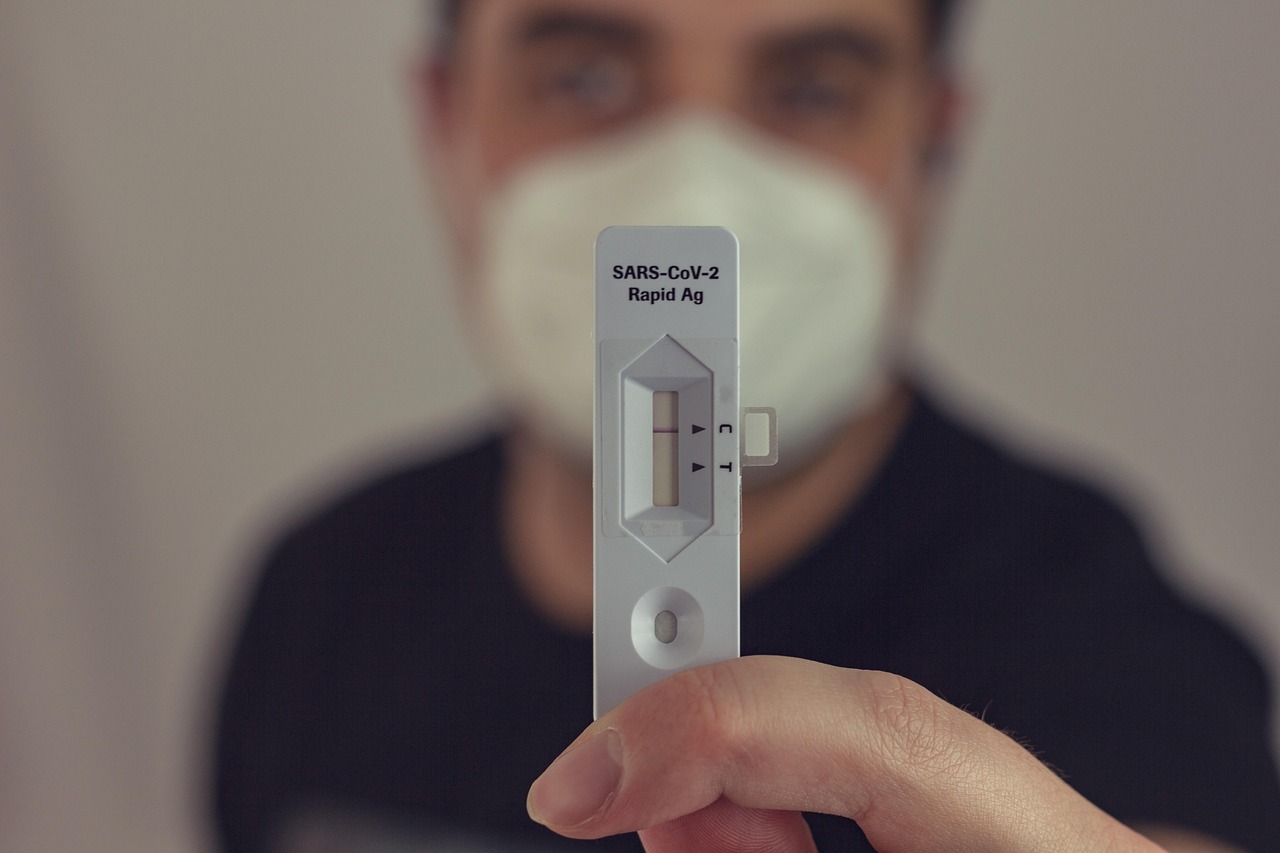
Image by Shutter_Speed on Pixabay.