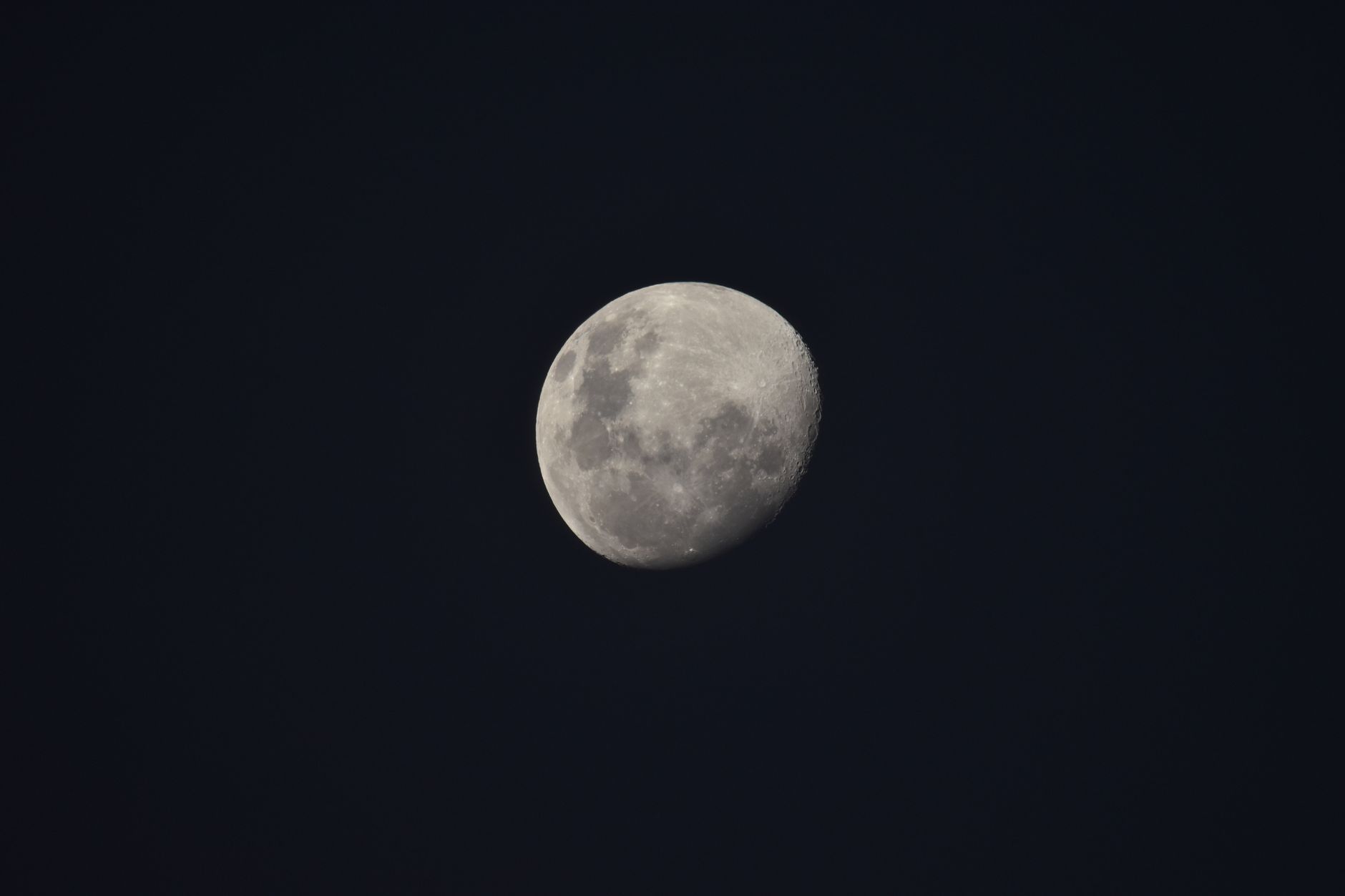
The Moon appears to offer its own building supply. Its surface is covered in loose material that could potentially be piled over habitats for protection, compacted into roads, or processed into structural elements. But before lunar construction can use that material at scale, it must solve a more basic problem: keeping the finest fraction of it from getting everywhere.
Lunar dust engineering is not simply about cleaning equipment. It is a systems problem involving excavation, vehicles, spacesuits, airlocks, power systems, thermal control, crew health and maintenance. A particle that begins at an excavation site can cling to a boot, enter an airlock, abrade a seal, settle on an optical surface, burden a filter and consume crew time. On Earth, construction teams can rely on water, air, gravity, routine washing and easily replaced parts. On the Moon, vacuum, extreme temperature changes and limited access to spares make each of those assumptions weaker.
The broad blanket of fragmented material on the lunar surface is called lunar regolith. It includes particles ranging from fine dust to gravel, rocks and impact-generated debris. “Lunar dust” usually refers to the finest particles within that material, although the exact size cutoff can vary by study and engineering application. That distinction matters: a boulder is a handling challenge, while fine particles are especially likely to adhere to surfaces, enter narrow interfaces and become a contamination hazard.
The central contradiction of lunar construction is therefore clear. Regolith may be one of the Moon’s most useful local resources. Its dust-like fraction may also be among the most persistent threats to the infrastructure required to process it.
Why lunar dust is unlike ordinary household dust
Earth dust is shaped by an active planet. Wind, rain, rivers, biological activity and chemical weathering continually sort, transport and alter grains. Many terrestrial particles become rounded through repeated collisions or weathering. The Moon has no dense atmosphere, no rain and no flowing surface water. Its soil is instead produced and reworked largely by impacts, from major collisions to the continual bombardment of micrometeorites.
Those impacts fracture rock, melt and weld small fragments, and churn the upper surface over long periods. The result is a varied mixture of mineral grains, glassy particles and rock fragments. Much lunar material is angular, jagged or irregular rather than smoothly rounded. That morphology is one reason it can be abrasive. It is also important not to reduce the issue to a single image of uniformly razor-sharp dust: grain shapes, sizes and compositions vary across the Moon, and the practical risk depends on where material is collected and how it is handled.
For engineering purposes, particle size is only one part of the story. A relatively large grain may jam a mechanism or scratch a surface. Finer particles may be more readily transported, more difficult to remove and more likely to reach filters, seals and crevices. Concentration, exposure duration, mechanical pressure and the material being contaminated all affect the outcome. A wheel operating briefly on undisturbed ground faces a different problem from an airlock repeatedly receiving dust-covered suits after excavation work.
That is why Moon dust hazards should not be framed as an unavoidable catastrophe. They are manageable in principle, but they cannot be treated as an afterthought. The environment demands hardware designed around contamination from the start.
The electrostatic problem: dust that can cling, move and return
Abrasion is only part of what makes fine lunar material troublesome. The exposed lunar surface is subject to solar ultraviolet radiation and the solar wind, a stream of charged particles from the Sun. These conditions can cause surfaces and individual grains to accumulate electrical charge. In some circumstances, charge differences can contribute to particles adhering to equipment or being mobilized near the surface.
The details are complex. Charging can differ between sunlit and shadowed terrain, near the boundary between day and night, and around spacecraft or operating machinery. Local topography, material properties and plasma conditions also matter. Laboratory work and mission observations have helped establish that electrostatic effects are relevant to lunar dust behavior, but they do not yet provide a universal prediction for every worksite, illumination condition or construction process.
For engineers, the important point is practical: dust may not behave like passive sand. A brush or shake that works in a terrestrial workshop may leave charged particles attached to a surface. A cleaned component can be contaminated again when it meets another dusty interface. Fine grains may be drawn toward surfaces and sheltered recesses where they are difficult to inspect.
Potential responses include surface coatings, carefully chosen textures, mechanical cleaning methods and concepts that use electric fields to move charged particles from a surface. Electrodynamic dust shields, for example, use patterned electrodes to create traveling electric fields that can transport particles away. Such systems have been investigated for uses including solar arrays, optical surfaces and other exposed hardware. Their real-world value will depend on factors such as power use, durability, integration with the protected surface and performance under realistic lunar vacuum, temperature and dust conditions.
Operations matter as much as devices. A well-designed lunar site would separate dusty material-handling zones from clean interfaces, limit unnecessary traffic through regolith and avoid putting sensitive equipment directly beside excavation or processing activities.
Machines: every joint, seal and radiator becomes a dust problem
On a construction site, moving parts create opportunity for dust to enter. Bearings, hinges, wheel assemblies, drilling systems, actuator rods, connectors and seals can all suffer when abrasive particles reach their working surfaces. Dust can increase friction, accelerate wear, interfere with lubrication strategies and compromise seals intended to keep pressure or contaminants where they belong.
Lunar machines face these risks while also operating in vacuum and through major thermal cycles. Materials expand and contract. Conventional lubricants may not behave as they do in air. Heat must often be rejected through radiators rather than carried away by moving air. If dust accumulates on a radiator or thermal surface, it may alter how efficiently the system exchanges heat. Dust on cameras, lidar windows, solar panels and scientific instruments can similarly degrade performance even if the underlying mechanism is intact.
There is no single dust-proof hinge or wheel. The usual engineering response is layered protection: reduce the amount of dust that reaches a component, make the component less vulnerable to the dust that does arrive, and ensure it can be inspected or replaced if performance declines. That can mean sealed or shielded interfaces, protective covers, sacrificial outer layers, dust-tolerant bearing designs, fewer exposed moving parts and cleaning features built into the machine rather than added later.
Robotic excavation adds another challenge. Moving regolith can generate ejected material, especially when tools disturb loose surface layers or vehicles operate at speed. In the Moon’s weak gravity, particles follow different trajectories than they would on Earth, and there is no atmosphere to slow them. Excavators, haulers and landing systems must therefore be designed with plume and ejecta control in mind, not just digging capacity.
Spacesuits: keeping the outside outside
For Apollo crews, lunar dust was not an abstract concern. Mission accounts describe dust adhering to suits and equipment, and astronauts reported irritation after dust was brought into the cabin. Those experiences remain valuable evidence of the contamination challenge, but they were gathered during short missions. They do not by themselves settle the health implications of repeated exposure during months-long surface operations.
The health concern is straightforward even where long-duration evidence is incomplete: fine mineral particles are undesirable in a breathable habitat. If dust enters the cabin, it can irritate eyes and airways, contaminate surfaces and impose an additional burden on environmental-control systems. Its toxicity under realistic long-term lunar exposure conditions remains an area requiring careful study. Particle chemistry, size, exposure dose and individual biology all matter, and lunar material brought back by Apollo is limited.
A spacesuit is therefore not only personal protective equipment. It is part of the site’s contamination-control architecture. Dust can abrade outer fabric layers, lodge in joints and fasteners, and threaten interfaces between the suit and life-support hardware. Repeated exposure is especially important: a solution that survives one excursion may not endure hundreds of work cycles.
One influential approach is the suitport, in which a suit remains attached to the exterior of a vehicle or habitat and the astronaut enters through the rear of the suit. The aim is to keep the dirtiest hardware outside the living volume. Other approaches include improved suit textiles and coatings, dust-removal stations, mechanical brushing, airlock layouts that create a transition zone, and operational rules for inspecting suits before they approach clean equipment. No system can assume perfect removal. The realistic objective is to reduce dust transfer enough that the remaining contamination is tolerable and controllable.
Habitats and life support: contamination is a systems issue
Habitats concentrate the consequences of small failures. Dust can arrive on suits, tools, cargo, rover wheels or samples. From there it may reach floors, airlock seals, electrical connectors, filters and electronics. A fine particle that is insignificant outdoors can become consequential inside a pressurized volume where crews live and where every kilogram of replacement hardware has a logistical cost.
Air filtration is essential, but filters are not a magic boundary. They need to capture relevant particles without imposing excessive resistance on airflow, and they need service intervals that a crew can realistically maintain. A filter clogged by frequent dusty operations becomes a recurring maintenance task. The same is true of cleaning systems, vacuum devices, brushes and replacement seals: each introduces mass, power needs, storage demands and potential failure modes.
The strongest habitat strategy is likely to be zoning. A lunar surface infrastructure plan can designate exterior work areas as dirty, establish intermediate spaces in airlocks for removal and inspection, and preserve the main living volume as clean as practical. Tool storage, sample handling and suit maintenance should follow the same logic. This is familiar to clean-room and industrial-safety designers on Earth, but the Moon raises the stakes because resupply is slow and a simple repair may require an astronaut to work outside.
Construction: using regolith without turning the site into a dust cloud
The appeal of in-situ resource utilization is obvious: using local regolith could reduce the amount of shielding or construction feedstock launched from Earth. Regolith placed over a habitat may help provide protection from radiation, micrometeoroids and temperature swings. It may also support berms, landing-pad concepts, roads or other lunar surface infrastructure. Yet moving it safely is not equivalent to dumping ordinary soil with terrestrial construction equipment.
Many familiar methods depend on conditions the Moon does not offer. Water-based concrete is difficult to justify where water is precious and environmental conditions are extreme. Earthmoving machinery designed around atmospheric cooling, terrestrial lubricants and abundant maintenance cannot simply be transplanted. Even apparently simple tasks such as transferring loose material between containers must account for dust escape, electrostatic adhesion and the challenges of cleaning equipment in vacuum.
Proposed Moon construction technology includes mechanically compacting regolith, sintering it with heat, melting it into more consolidated material, and using additive-manufacturing or extrusion-like processes. Each route has trade-offs. Heating or melting material requires substantial energy and equipment able to endure thermal stress. Additive processes require controlled feedstock and reliable deposition. Compaction may be less energy-intensive in some cases but still must produce material with appropriate structural behavior. Any method must be evaluated for the strength, porosity, cracking and thermal cycling of the final product, not merely for whether it can form a shape in a laboratory.
Much of this work is necessarily performed with lunar simulants rather than lunar material. Simulants are indispensable because actual lunar samples are scarce, but they cannot perfectly reproduce every property of a specific lunar soil, including its mineral mix, grain shape, maturity, electrostatic behavior or volatile history. Results from simulant tests are promising engineering evidence, not automatic proof of performance on the Moon.
The most credible early construction campaigns may therefore be modest and controlled: robotic demonstrations of excavation, handling, compaction or shielding placement, followed by gradual increases in scale. Reliable interfaces and maintainable equipment may matter more initially than producing ambitious structures quickly.
What engineers are doing about it
Dust mitigation research spans materials science, robotics, human factors and environmental control. Teams use vacuum chambers, thermal testing, electrostatic experiments, regolith simulants and terrestrial field analogues to examine how hardware degrades. Reduced-gravity testing can add useful information, although it is difficult to reproduce the full lunar combination of gravity, vacuum, radiation, temperature and natural dust in one facility.
Approaches under investigation include:
- Electrodynamic dust shields that use electric fields to transport particles from exposed surfaces.
- Coatings and surface treatments intended to reduce adhesion or make cleaning easier.
- Mechanical methods such as brushes, wipers, covers and guarded interfaces.
- Suitports and better airlocks that prevent dusty suits from entering the main habitat.
- Robotic handling systems designed to control regolith movement and reduce ejecta.
- Design for maintenance, including accessible inspection points, replaceable parts and redundancy in critical systems.
Gas-based cleaning can be useful inside a controlled pressurized environment, but it is not a free solution on the lunar surface, where gas is a consumable resource and vacuum changes how jets and particles behave. Similarly, a coating that repels dust may introduce durability, conductivity or thermal-control trade-offs. Every mitigation method has to earn its place in a mission through testing, mass and power budgets, reliability analysis and compatibility with the rest of the system.
The overlooked lesson: dust connects every subsystem
The most important insight from lunar dust engineering is that it resists compartmentalization. It links mobility to habitat operations, construction to crew health, solar power to thermal control, and spacesuit design to logistics. A rover that tracks contamination into an airlock can affect filter replacement schedules. A construction method that produces excessive loose material can raise the maintenance burden on nearby instruments. A poorly placed radiator can become a dust-management concern even if it never contacts a shovel.
The best answer will likely be a layered one:
- Reduce dust generation and unnecessary disturbance at the source.
- Block transport through zoning, covers, seals and controlled interfaces.
- Remove contamination using mechanical, electrostatic or other suitable methods.
- Build critical systems that can continue operating when some contamination remains.
This is not a glamorous vision of lunar building, but it is a durable one. Extreme-environment infrastructure succeeds by treating ordinary physical details as mission-level constraints.
The first lunar builders will be contamination managers
The Moon’s loose surface material may eventually protect habitats, support roads and provide feedstock for local manufacturing. But the same regolith can damage the joints, seals, fabrics, sensors and filters needed to make those activities routine. The first sustained lunar construction efforts will not depend on one miraculous printer, coating or robot. They will depend on disciplined control of interfaces between people, machines and a pervasive granular environment.
That is the real lesson of lunar construction. Building beyond Earth starts not with a blueprint for a base, but with an understanding of what the environment does to every exposed surface and moving part. On the Moon, the smallest particles may determine whether the largest structures can last.
Image by Fernanda Gomez de la torre on Pexels.