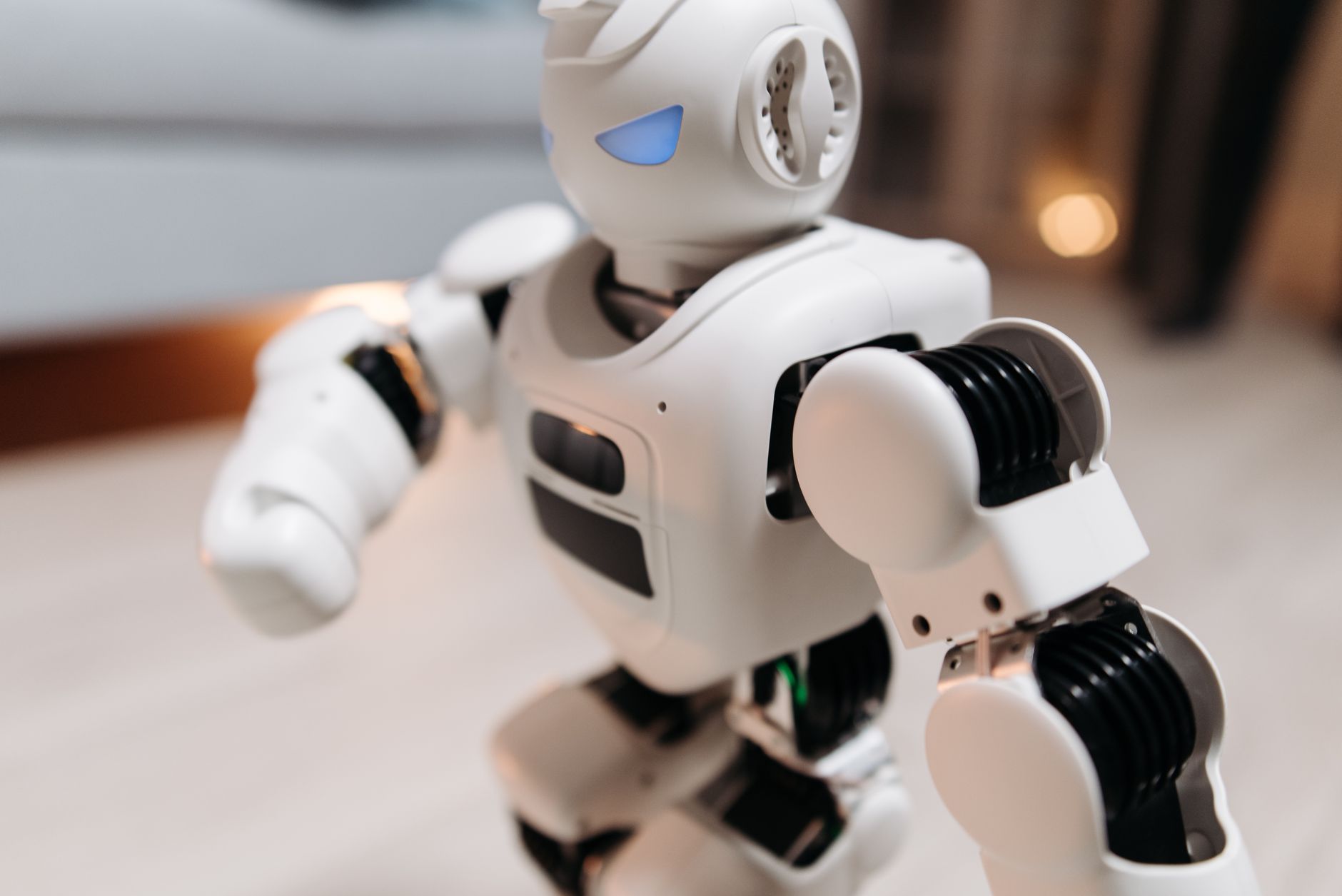
A robot that can understand a sentence is not necessarily a robot that should obey it. “Open that door,” “bring me the medication,” “record this room,” and “move that box” sound like ordinary requests. But each conceals questions that matter for robot safety and human-robot interaction: Who is asking? Do they have the authority to ask? Who else might be affected? Is the action safe, private, reversible or lawful?
Those questions become urgent as robots leave tightly controlled industrial cells and appear in homes, hospitals, warehouses, offices and public-facing settings. A machine may be technically capable of carrying out an instruction while lacking the social and institutional grounds to do so. It may recognize a voice, parse a command and identify an object, yet still fail to understand that the object belongs to someone else, that a room is private, or that a seemingly helpful action could put a bystander at risk.
The central challenge is not simply making robots more obedient. It is building systems capable of disciplined obedience: systems that can recognize the limits of a request, communicate uncertainty and stop when the decision belongs to a person or institution rather than an algorithm.
A command is not the same thing as permission
Human beings routinely separate requests from authorization, even when we do so imperfectly. A colleague can ask to borrow a laptop without having permission to unlock it. A child can ask a smart device to order something without being allowed to spend money. A visitor can ask a household robot to show them around without gaining access to private rooms.
For robots, that distinction needs to be explicit. Traditional command systems often operate on a simple model: receive an instruction from an approved interface, then perform the corresponding action. That model is useful for narrowly bounded tasks, but it becomes inadequate when a machine can move through shared space, manipulate physical objects, collect data or interact with people who did not initiate the task.
Permission-aware behavior means treating an instruction as one input into a larger judgment. The robot must consider identity, authority, scope, timing, risk and the people exposed to the consequences. It should not assume that a valid command is a sufficient reason to act.
The four distinctions a safe robot must make
Permission is not a single setting. In practice, robots need to distinguish among at least four overlapping categories.
- A request is an appeal for assistance. It tells the robot what somebody wants, but not necessarily what they are entitled to authorize.
- Authorization is permission granted by someone with the relevant responsibility. A resident may authorize entry to a room; an equipment custodian may approve use of a machine; a clinician may authorize a task within a care workflow.
- A dangerous instruction may be clear and formally authorized, yet still require refusal, delay, additional checks or human review because foreseeable harm is too high.
- An action affecting another person involves someone beyond the requester: their body, belongings, privacy, environment, access or opportunity to make their own choice.
These categories do not neatly line up. A manager may be authorized to direct a workplace robot but not to override a safety procedure. A homeowner may own a robot but not have a blank cheque to record guests in intimate spaces. An emergency may justify entry into a normally restricted area, but an alleged emergency should not become a loophole that any speaker can invoke.
Safe robot behavior therefore depends on context. It matters whether a request comes during an evacuation, after working hours, in a shared apartment, near a child, inside a restricted facility or through a message forwarded by someone else. It also matters whether the action is reversible. Moving a chair is different from disposing of a document; delivering a sealed package is different from opening it.
Why language understanding is not enough
Modern AI can make robots easier to instruct in ordinary language. But linguistic fluency is not the same as grounded understanding of the physical and social world. A system can correctly interpret the grammar of “take these files to my office” without knowing whether the files are confidential, whether the speaker is impersonating another employee, or whether the office is currently occupied by someone who has asked not to be disturbed.
This limitation is especially important for systems that use large language models or other generative AI to interpret instructions. Such systems can be valuable interfaces, but they may inherit familiar weaknesses: ambiguity, misplaced confidence, susceptibility to misleading prompts and difficulty connecting broad language to the precise state of a changing environment. A robot also faces inputs that a chat system does not: gestures, access badges, room boundaries, physical hazards, interruptions and commands from multiple people.
Voice is a particularly weak proxy for authority. Voices can be misheard, relayed through a speaker, imitated or recorded. Facial recognition and device-based authentication introduce different problems, including error, exclusion and privacy concerns. Even reliable authentication establishes only who appears to be interacting with the robot. It does not establish what that person is allowed to approve in this situation.
A robot that follows the most recent, loudest or most confident instruction is not socially intelligent. It is easy to manipulate. The goal is not a magical software switch called consent, but a continuing process of checking what is known, what remains uncertain and who should decide.
Permission must have a scope and an expiry date
People rarely grant unlimited permission. They authorize particular acts under particular conditions. Permission to clean a kitchen does not automatically include opening a medicine cabinet. Permission to enter an office does not include reading documents on a desk. Permission to move a box does not include throwing it away.
Good robot permissions should be similarly bounded. They may specify an action, an object, a location, a time period and a purpose. They should also support revocation. If a resident tells a domestic robot not to enter a bedroom, or a facility manager removes a contractor’s access, the change should take effect clearly and promptly rather than being buried in an account menu.
Delegation adds another layer. A person may authorize a caregiver to use a robot for certain tasks, while limiting access to recordings or financial settings. In a workplace, one employee may request a delivery while another person must approve entry to a controlled area. These are ordinary organizational arrangements, but they are difficult to represent when a product assumes one owner and one set of preferences.
Robots should make their current understanding visible: what they believe they can do, for whom, where and for how long. A user should not have to guess whether the machine treats an old permission as still active.
Domestic robot safety is about everyone in the home
The home is often presented as a simple setting: an owner buys a robot and configures it. Real homes are not so simple. They contain partners, children, roommates, relatives, carers, domestic workers, guests and visitors. They may also contain people with unequal power over household technology.
This matters most when robots can sense and act. A mobile machine may map rooms, capture audio or video, identify people, open doors or containers, carry objects, monitor activity, or transmit information to a remote service. Each capability can be useful. Each can also cross a boundary set by someone other than the account holder.
Consider a child asking a robot to enter a parent’s room, a guest asking it to stop recording, or a caregiver needing access to supplies that a resident normally keeps private. Recognizing the owner’s voice cannot settle these conflicts. Nor can it answer whether someone meaningfully agreed to be recorded in a shared space.
Practical domestic safeguards may include:
- role-based settings for residents, carers and temporary guests;
- clear physical and on-screen indicators when cameras, microphones or remote connections are active;
- confirmation before entering sensitive rooms, opening containers or sharing captured information;
- local data processing where it is technically appropriate and privacy-protective;
- easy-to-reach pause controls and physical emergency stops for machines that move or manipulate objects.
These measures do not eliminate difficult family dynamics. They can, however, make a robot’s behavior more legible and give people meaningful ways to object.
Workplace robot safety follows roles, not volume
Workplaces have their own permission structures: formal reporting lines, safety officers, equipment custodians, security teams, contractors, visitors and specialist responsibilities. A robot operating in a warehouse, hospital, laboratory, factory or office cannot safely infer authority from a job title alone, let alone from who speaks most forcefully.
A warehouse supervisor may request that an autonomous mobile robot take a shortcut, but the route may cross a restricted or unsafe zone. A clinician may ask a hospital delivery robot to retrieve an item, while pharmacy or infection-control rules restrict what it can carry. An office security robot may have access to sensitive location data without any reason to disclose one employee’s whereabouts to another.
Industrial and collaborative robot deployments are already shaped by safety engineering, risk assessment and applicable standards. International standards in the ISO 10218 family address industrial robot safety, while ISO/TS 15066 has informed collaborative robot applications; personal-care robot safety is addressed by ISO 13482. These frameworks are important, but permission and authority questions can extend beyond physical collision risks. They include access, privacy, workflow control and accountability.
That is why workplace systems need separation of duties. The person who requests an action may not be the person allowed to approve it. Sensitive actions should have identifiable escalation paths, meaningful human overrides and audit records proportionate to the risk. Logging should support accountability without becoming a pretext for indiscriminate surveillance of workers.
Helping one person can harm another
The hardest cases arise when serving a user conflicts with protecting a third party. A robot may be asked to open a locked door, reveal a colleague’s location, move a mobility aid, change a room’s temperature, deliver a potentially dangerous item or clear belongings from a corridor. The requester’s intention may be benign, but the affected person may be absent, unable to consent or exposed to a serious consequence.
A robot needs some model of affected people, not only a model of its direct user. It does not need to solve every moral dispute autonomously. In many cases, the safe response is precisely to avoid pretending it can.
Proportionality is useful here. Low-risk, reversible actions can often proceed with little friction. Actions involving bodily safety, private data, access control, property, financial consequences or irreversible change deserve more scrutiny. If uncertainty is high, a robot should ask, pause or escalate rather than guess.
A refusal should be intelligible. “I can move the box, but it is in another worker’s assigned area and I need their approval or a supervisor’s confirmation” is more useful than a generic failure message. It explains the boundary without disclosing unnecessary private information, and it offers a path forward.
A practical permission architecture for robots
A robust approach to AI agents and authorization can be framed as a decision sequence rather than a single gate.
- Identify the actor. Determine who is interacting, while recognizing that authentication does not automatically establish authority.
- Interpret the request. Clarify the requested action, object, location and intended outcome.
- Check scope and authority. Determine whether permission covers this action, in this place, at this time, and whether the person can grant it.
- Assess risk. Consider physical injury, privacy, security, financial loss, property damage and reputational harm.
- Identify affected people. Ask who else may be exposed to the action or deprived of a choice.
- Check reversibility. Favor actions that can be safely undone when confidence is limited.
- Confirm, refuse or escalate. Seek clarification or transfer the decision to a responsible human when the stakes or uncertainty justify it.
- Record appropriately. Preserve relevant decision records for review while minimizing unnecessary collection of personal data.
This architecture does not require every robot to conduct a lengthy interrogation before moving a cup. Its purpose is to match friction to consequence. A delivery robot can normally take a routine route; a request to enter a locked room should trigger a different process.
Robots should communicate uncertainty, not hide it
Good human-robot interaction depends on explanations people can understand under pressure. A robot should say what it understood, what it lacks and what can happen next. It may use speech, a screen, lights, audible tones and accessible physical controls, depending on the environment and users’ needs.
There is a design danger in making robots too socially smooth. A friendly voice and conversational manner can encourage people to assume a machine possesses broader judgment, empathy or legal authority than it actually has. Interfaces should be approachable, but they should not conceal limitations behind personality.
For a domestic system, that might mean: “I can enter the kitchen, but bedroom access is currently restricted.” For a workplace machine, it might mean: “This route enters a controlled area. Please use an approved access method or contact the area supervisor.” Clear messaging turns a hidden rule into a contestable decision.
Technical safeguards cannot solve a social problem alone
Permission systems are necessary, but they cannot resolve unclear ownership, coercive consent, unfair workplace policy or conflicting legal obligations by themselves. A robot cannot make a bad rule legitimate merely by enforcing it consistently. Nor should manufacturers shift responsibility onto a machine for decisions that employers, household members, product designers or public authorities should make.
Consent in robotics can be withdrawn, pressured, uninformed or impossible to obtain in a genuine emergency. Product teams must therefore test beyond ideal users and scripted demonstrations: with children, older adults, disabled people, guests, contractors, bystanders and non-expert operators; in cluttered rooms, noisy workplaces and situations with conflicting instructions.
Privacy law and workplace obligations also vary by jurisdiction, particularly where robots process audio, video, location or biometric data. Organizations should seek relevant legal and safety expertise rather than treating a default product setting as a complete compliance strategy.
A safe robot is a sociotechnical system. Its safety comes from hardware limits, physical design, access controls, cybersecurity, training, environmental rules, incident response, oversight and clear lines of human accountability.
What trustworthy robot behavior looks like
Imagine a household robot asked by one roommate to remove a suitcase from another roommate’s locked bedroom. It can understand the words and locate the room, but it should recognize the access boundary, the absent person’s interests and the risk of mishandling property. The appropriate response may be to refuse entry and offer to notify the other resident or retrieve an alternative item.
Now imagine a workplace robot asked to move a pallet through an area where maintenance is underway. Even if the request comes from an authenticated employee, the robot should check the current operational restriction. It may take a safe alternative route, wait for clearance or escalate to the designated supervisor. Immediate compliance is not always the most helpful outcome.
In both examples, the robot preserves human agency. It does not silently decide social disputes, and it does not make access rights disappear because a request was phrased confidently.
The future of robotics depends on disciplined obedience
The most important difference between a command-following machine and a trustworthy robot is not eloquence. It is whether the machine understands that an instruction has limits.
As robots gain mobility, perception and access to shared environments, they should be judged not only by what they can do, but by whether they know when they are allowed to do it. That requires systems that are cautious without becoming useless, clear without becoming evasive, and accountable to more than the person holding the microphone.
Permission-aware robots will not remove human conflict. But they can avoid turning ordinary ambiguities, power imbalances and privacy boundaries into automated harm. That is the real promise of safer automation: not machines that obey every command, but machines designed to recognize when obedience is not permission.
Image by Pavel Danilyuk on Pexels.