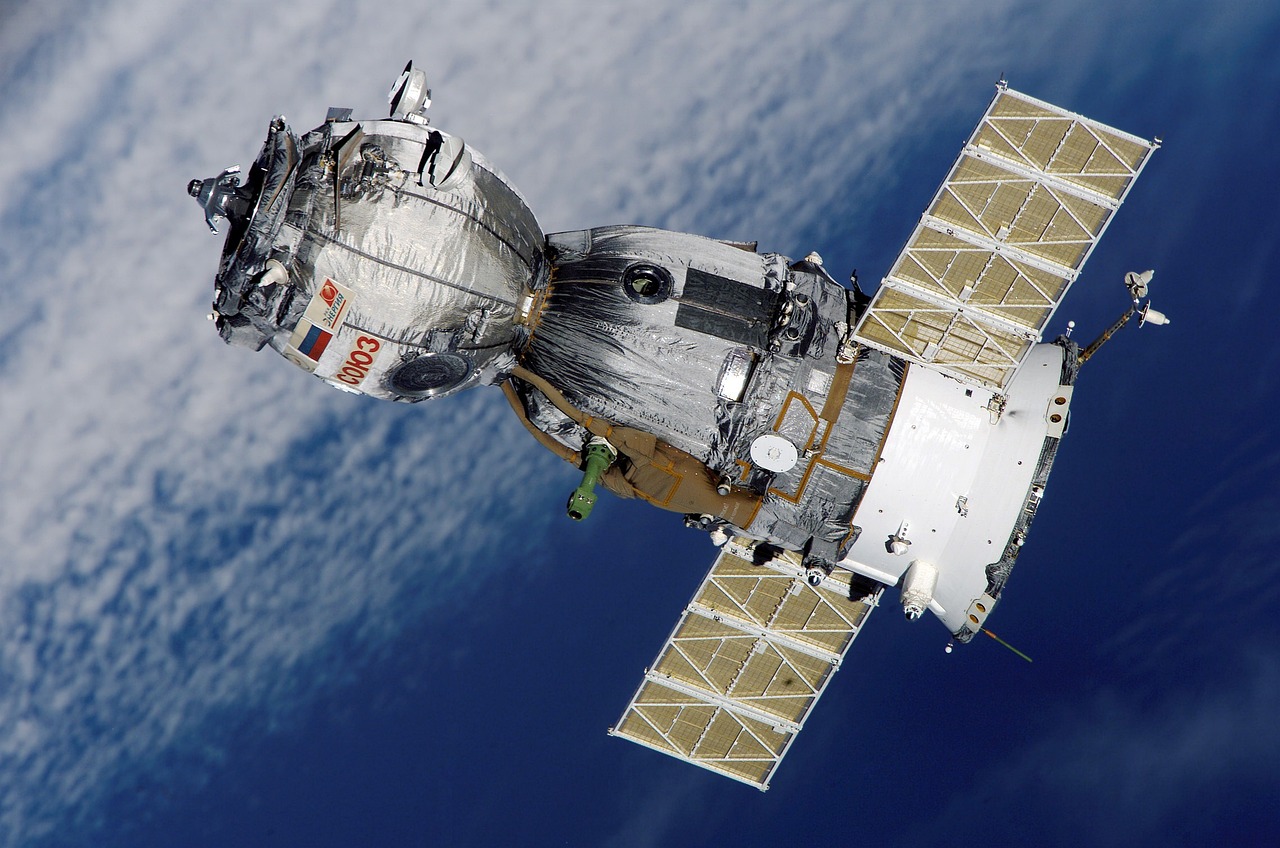
A spacecraft travelling far from Earth cannot wait for a person to tell it what to do. By the time a warning reaches mission control, and a reply travels back, the moment to avoid a hazard, protect an instrument or preserve power may already have passed. That is why spacecraft autonomy is not mainly about making machines seem intelligent. It is about ensuring they can make limited, safe decisions when Earth is too distant to participate in real time.
This is already true for robotic space missions. It will matter even more for crews travelling to Mars or operating on the lunar surface from a distant control room. The central design question is not whether a spacecraft should have unlimited freedom. It is which decisions must be made locally, which decisions can wait for Earth, and how a vehicle should behave when its information is incomplete or something goes wrong.
Deep space exploration therefore changes the relationship between a spacecraft and mission control. Near Earth, operators can often monitor a vehicle closely and send commands quickly. Farther away, they become planners, reviewers and recovery specialists. The spacecraft becomes responsible for surviving the interval between conversations.
Communication delay is more than a slow connection
People often describe space communication as if it were a weak version of an internet connection. The more fundamental issue is physics: radio signals, laser communications and other electromagnetic signals cannot travel faster than light. No antenna, software update or artificial intelligence system can remove that limit.
The time depends on distance. A signal between Earth and the Moon takes roughly 1.3 seconds one way, or about 2.6 seconds for a simple question-and-answer exchange before processing time. That is noticeable but manageable for many operations. It is one reason some forms of supervised lunar robotics may be practical.
Mars is a different operational world. Because both planets move in their own orbits, the one-way communication delay between Earth and Mars varies substantially, commonly from roughly 3 to 22 minutes. A round-trip exchange can therefore take from about 6 to 44 minutes, before anyone has considered how long it takes people or software to interpret the message and formulate a response.
At Jupiter, one-way light time is typically measured in tens of minutes; at the outer planets, it grows to hours. NASA’s Voyager spacecraft, now in interstellar space, are examples of missions where commands take many hours to arrive. Such distances make joystick-style control impossible.
But signal travel time is only one constraint. A mission may also face:
- Limited bandwidth: A spacecraft cannot continuously send every camera image, engineering measurement and scientific reading to Earth.
- Scheduled contact windows: A vehicle may communicate only when it can point its antenna toward Earth and when a ground antenna is available.
- Obstructions and conjunctions: The Sun, a planetary body, terrain or a spacecraft’s own orientation can interrupt communication.
- Power limits: Maintaining communications uses energy, and a vehicle may need to prioritize heating, survival or science instruments instead.
These limitations mean that even a spacecraft with a working radio is not necessarily available for immediate conversation. In operational terms, silence can be normal.
Why mission control cannot simply intervene in time
Near Earth, human-in-the-loop systems work well for many tasks. Satellite operators can upload commands, examine telemetry and respond to anomalies on short timescales. Astronauts aboard the International Space Station can coordinate closely with teams on the ground. Even then, vehicles use automatic systems for functions that happen too quickly or too routinely for a person to manage continuously.
Distance turns that sensible division of labour into a hard boundary. Imagine a Mars rover approaching a rock field. If it sends an image to Earth and waits for a driving instruction, the delay may be tens of minutes. If it is moving, it needs to detect hazards and stop itself. If a power fault threatens its battery or if an instrument overheats, it may need to place itself in a protective configuration before operators even know the problem exists.
The issue is not that Earth-based teams are incapable. Mission controllers possess context, experience and scientific judgment that onboard software does not. The issue is that their judgment arrives late. A command that is perfectly correct when sent may be unsafe by the time it is received because the spacecraft’s position, power state or environment has changed.
This is especially important for Mars mission communication. During solar conjunction, when the Sun lies close to the line between Earth and Mars, agencies may pause or sharply limit commanding because solar interference can corrupt signals. Mars spacecraft are prepared to continue through these periods with carefully planned activities and protective operating rules. They are not abandoned, but they cannot depend on real-time troubleshooting.
What an autonomous spacecraft can decide locally
Autonomy exists on a spectrum. The most useful systems do not try to solve every problem a human might solve. They handle narrow classes of decisions at the speed and location where those decisions are needed.
Navigation and hazard avoidance
Robotic vehicles must often estimate where they are, compare sensor readings with a map or planned route, and decide whether a path is safe enough to continue. NASA’s Mars rovers have used autonomous navigation capabilities to assess terrain and avoid obstacles while driving. Perseverance, for example, uses an enhanced autonomous navigation system that helps it process images and plan routes around hazards more efficiently than earlier rover systems.
This does not mean a rover independently chooses the broad purpose of its journey. Science and operations teams still select major destinations and define constraints. Local navigation autonomy helps execute that intent without requiring an operator to approve every wheel movement.
Fault detection and protection
Fault protection is among the oldest and most important forms of spacecraft autonomy. A spacecraft monitors conditions such as temperatures, voltages, processor health, attitude-control performance and communication status. When values cross specified limits, onboard software can take protective action: turning off a nonessential instrument, switching to backup hardware, reducing activity or entering safe mode.
Safe mode is deliberately conservative. Typically, the spacecraft stops much of its planned work, stabilizes its orientation, protects power and thermal systems, and attempts to re-establish a reliable communications link. It is not a sign that the vehicle has solved every underlying problem. It is a way of buying time until humans can diagnose the situation.
Routine scheduling and resource management
A distant spacecraft may need to decide when to charge batteries, point solar arrays, warm equipment, store data, run an instrument or prepare for a communications pass. These tasks compete for limited power, time and onboard memory. Planning software can carry out an approved activity sequence while responding to predictable changes, such as a missed observation or an instrument that is temporarily unavailable.
NASA’s Deep Space 1 mission famously demonstrated a high degree of onboard autonomy through its Remote Agent experiment. The software was designed to plan activities, monitor execution and respond to some faults during a technology demonstration. It did not eliminate ground control, but it showed that onboard planning could take responsibility for portions of a mission that had traditionally depended on continuous human oversight.
Science triage
Data return is often the bottleneck in robotic space missions. A spacecraft may collect more images and measurements than it can transmit. In some cases, onboard software can help identify data that deserve priority.
NASA’s Autonomous Exploration for Gathering Increased Science, or AEGIS, has been used on Mars rover missions to identify and target rocks or other features meeting criteria set by scientists. The system does not replace scientific interpretation. Rather, it can use predefined goals to select observations when waiting for a new Earth command would waste an opportunity. This is a practical example of autonomy serving science under communication constraints.
Autonomy is not the same as intelligence
The word “autonomous” can suggest a machine with human-like understanding. Most spacecraft autonomy is more bounded than that. It is usually a combination of carefully engineered rules, models, planners and safeguards designed for particular conditions.
- Preprogrammed rules specify actions for known conditions: if a temperature exceeds a limit, reduce the load; if communications are lost, switch to a safe configuration.
- Adaptive planning rearranges approved tasks in response to changing resources or timing constraints.
- Model-based diagnosis compares expected system behaviour with observed behaviour to help identify faults.
- Machine-learning methods may classify images, recognize patterns or support navigation, but require careful validation and defined operating limits.
Machine learning is increasingly relevant to space systems, particularly for image analysis, terrain assessment and data prioritization. Yet it brings challenges that are unusually serious in space. Training data may not represent an unfamiliar environment. Radiation, hardware limits and the need for predictable behaviour constrain what can be run onboard. A model that performs well in testing may still encounter conditions it has never seen.
For that reason, agencies do not treat artificial intelligence as a substitute for engineering discipline. The safest use is often as one component inside a broader architecture that checks inputs, limits allowed actions and retains conservative fallback behaviour.
Designing for uncertainty, not perfection
Spacecraft operate with imperfect knowledge. Sensors can be noisy. A camera may be blinded by glare. A dust event can reduce solar power. A thruster may behave differently as hardware ages. A mission can encounter terrain, particles or thermal conditions that were difficult to predict before launch.
Autonomous spacecraft are therefore designed around priorities. Survival generally comes before communications, communications before routine science, and routine science before optional activity. Those priorities can be more complicated in practice, but the principle is durable: an onboard system should know what it is never allowed to sacrifice for a lower-value goal.
Engineers also use redundancy and cross-checks. A spacecraft may have backup components, multiple sensors, separate computers or independent ways to estimate its condition. Command validation can prevent an uploaded instruction from violating known safety limits. Watchdog timers can reset stalled software. Telemetry records can preserve the sequence of events that led to a protective response.
Logging matters because autonomy must remain accountable. When communication returns, engineers need to know what the spacecraft sensed, which rule or planner decision was triggered, what actions were taken and whether the system reached its intended safe state. The goal is not merely to automate action; it is to make recovery and review possible after the fact.
Bounded autonomy is a safety architecture
The safest model is usually not “let the spacecraft decide everything.” It is bounded autonomy: a vehicle receives permission to act within defined limits, while humans retain authority over mission goals, risk tolerance and major changes in strategy.
A rover may be authorized to avoid obstacles but not to drive beyond a distance limit. An orbiter may be allowed to reset a computer, but only after preserving key data and trying specified alternatives. A science instrument may prioritize observations using criteria supplied by researchers, but it cannot redefine the science campaign.
Human override still matters, even though it is delayed. Once contact is restored, operators can update software parameters, revise plans, command diagnostics or direct the spacecraft into a new operating mode. The practical reality of deep-space human-in-the-loop systems is that the loop becomes slower and more strategic. Humans set the envelope; the machine handles time-critical execution inside it.
In deep space, autonomy is not the absence of human control. It is the ability to preserve human intent during the period when humans cannot be present.
What existing missions have already taught engineers
Space agencies have been developing these capabilities for decades because communication limits are not hypothetical. The lessons are visible in several kinds of mission operations.
- Mars rovers: Autonomous navigation allows vehicles to identify obstacles and make local route choices, reducing the need for painstaking stop-and-send driving. Ground teams continue to set destinations, science priorities and safety constraints.
- Deep Space 1: NASA’s Remote Agent demonstration tested onboard planning, execution and fault-management concepts, helping establish that a spacecraft could take on more operational responsibility than traditional command sequences allowed.
- Mars science targeting: AEGIS has demonstrated a form of onboard observation selection, enabling rover instruments to respond to locally identified features using scientist-defined criteria.
- Fault-protection systems: Across spacecraft operations, autonomous safe modes and protective responses are essential because a vehicle can lose contact, detect a dangerous state or experience a hardware anomaly outside a staffed ground shift or communications pass.
These examples also show the limits of the technology. Autonomy succeeds when missions define the problem carefully: avoid hazards, maintain safe temperatures, prioritize data meeting a particular condition. It is less dependable when a system must interpret ambiguous scientific meaning, balance novel ethical risks or improvise beyond its tested assumptions.
Future crews will need local authority as well as local software
For a crewed Mars mission, communication delay affects more than vehicle operations. It changes how astronauts receive medical advice, troubleshoot life-support equipment, navigate surface operations and manage conflict or stress during a long mission.
Earth-based experts could still provide valuable guidance, but not instant intervention. A medical consultation might involve a delay of many minutes in each direction. A crew facing a rapidly evolving equipment problem would need procedures, training, diagnostic tools and authority to act before waiting for a reply. Habitat systems would require automated monitoring and protective controls for air, water, temperature, power and fire-related hazards.
The psychological consequences are also operational. On the International Space Station, crews can communicate with Earth frequently and with comparatively little delay. A Mars crew would have more intermittent, asynchronous contact. That makes preparation, team cohesion and clear decision rights important technical concerns, not merely personal ones.
In this context, spacecraft autonomy does not mean replacing astronauts with software. It means creating a resilient partnership: crews handle judgment, adaptation and responsibility; automated systems watch continuous signals, execute rapid protective actions and present useful information rather than raw alarm noise.
The terrestrial lesson: local control matters when networks fail
Space is an extreme version of a broader engineering problem. Disaster-response robots may enter damaged buildings where networks are unreliable. Offshore energy systems can experience intermittent links. Remote industrial equipment may operate beyond the reach of rapid human support. Even ordinary infrastructure increasingly depends on cloud services and remote monitoring that can be interrupted by outages.
The lesson from autonomous spacecraft is not that every system should become independent. It is that designers should identify which failures cannot wait for a network round trip. A machine controlling a dangerous process should have a local safe state. A remote robot should know when to stop rather than continue blindly. A monitoring system should retain records locally so that operators can reconstruct events after connectivity returns.
That approach also improves cybersecurity and reliability. Systems that can fail safely during a lost connection are less dependent on constant remote access. But local autonomy introduces its own risks, so permissions, validation, audit logs and human review remain essential.
The future of exploration depends on choosing the right decisions
As spacecraft travel farther from Earth, the old picture of mission control as a team continuously steering every action becomes less accurate. Ground teams will remain indispensable: they define objectives, interpret discoveries, assess unusual risks and decide what a mission is ultimately for. But they cannot defeat the speed of light.
The practical future of spacecraft autonomy is therefore not unlimited machine freedom. It is disciplined delegation. Vehicles must navigate around immediate hazards, protect themselves during faults, manage scarce resources and preserve valuable data without waiting for instructions that may arrive too late. Humans must decide the boundaries, inspect the evidence and take back control when communication allows.
That balance is what makes distant exploration possible. The farther humanity sends its machines and crews, the more important it becomes to give them the capacity to act locally—and the wisdom to know when not to.
Image by WikiImages on Pixabay.