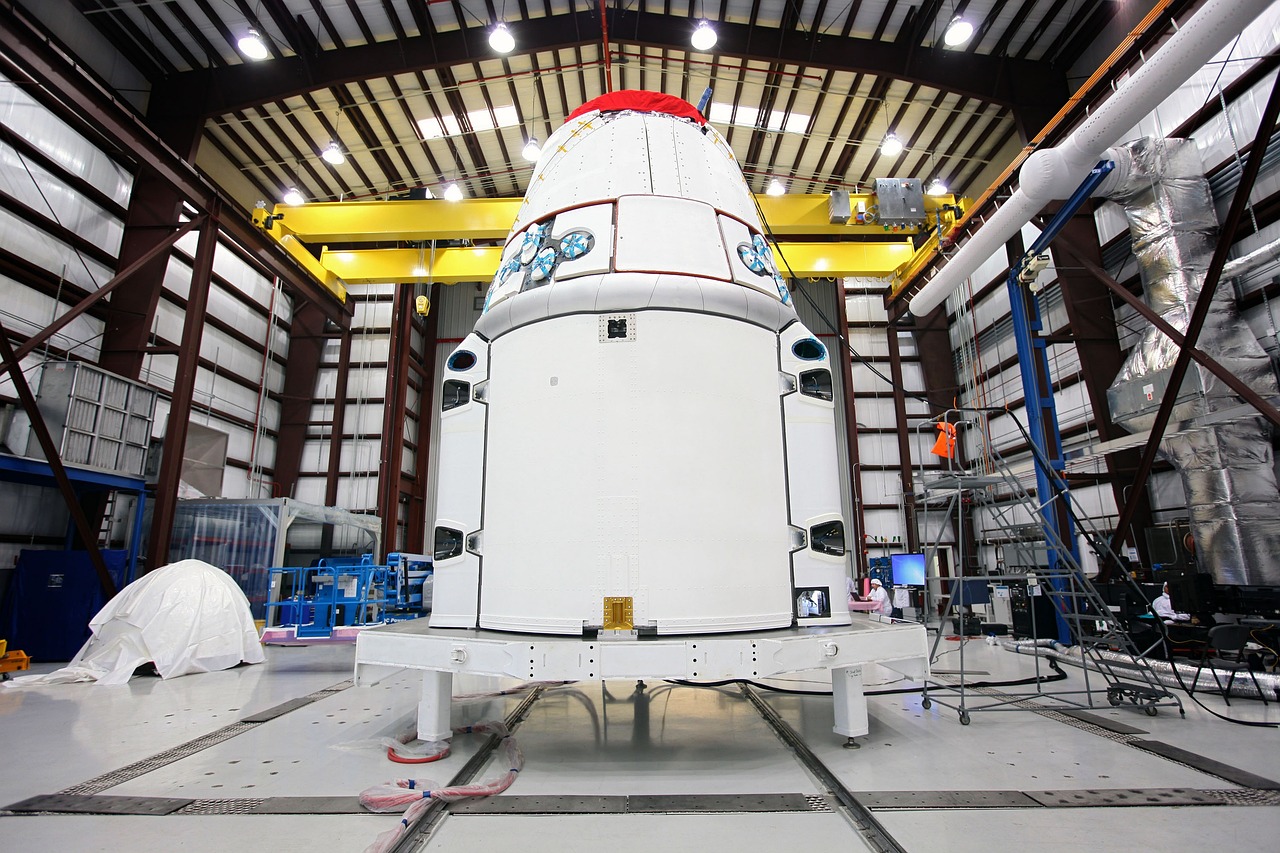
A spacecraft cannot call for help in the ordinary sense. By the time engineers on Earth learn that something is wrong, a distant vehicle may already have spent minutes, hours or days operating alone. Its most important form of intelligence is therefore not the ability to improvise like a human. It is the ability to fail gracefully: notice danger, stop making things worse, protect essential resources and remain recoverable.
That principle sits at the heart of spacecraft autonomy. Satellites and interplanetary probes are built with fault-management systems that watch for suspicious conditions, execute tightly constrained protective actions and hand the vehicle back to ground teams when possible. The objective is rarely to continue every scientific task at all costs. It is to preserve the spacecraft, its communications link and its future options.
This is a more useful model for autonomous technology than the fantasy of a perfectly self-sufficient machine. Space systems are designed around the assumption that hardware will age, software will encounter unexpected states, sensors will disagree and the environment will sometimes overwhelm the plan.
Distance turns a small anomaly into a design problem
On Earth, an engineer can often inspect a malfunctioning machine, restart it or physically replace a failed part. A spacecraft may be beyond immediate contact, moving rapidly and exposed to conditions that cannot be reproduced fully on the ground.
Even the speed of light imposes a practical limit. Signals between Earth and the Moon take roughly 1.3 seconds in one direction. Mars is much farther away: its one-way light-time varies with the planets’ positions, from roughly a few minutes to more than 20 minutes. For spacecraft in the outer solar system, a command and confirmation cycle can take many hours. No operator can steer through a fast-moving emergency under those conditions.
Contact is also intermittent. A planetary orbiter may be out of view of Earth during part of each orbit. A lander may have a low-gain antenna, limited relay opportunities or only a narrow window in which its power and pointing permit communication. Bandwidth is precious, so a spacecraft cannot continuously send every internal measurement to Earth.
Meanwhile, space is an unforgiving workplace. Radiation can alter data in electronics. Thermal conditions swing sharply between sunlight and shadow. Solar arrays, batteries, propulsion systems, moving mechanisms and antennas all have finite lifetimes. A minor sensor error can lead software to make a bad decision unless the system has been designed to recognize uncertainty.
That is why space mission reliability is not simply a matter of using robust parts. It is an architectural problem: deciding what the spacecraft should do when it cannot know exactly what is happening.
Fault management begins with noticing that reality has changed
Spacecraft fault management is often described as a layered defense. At the lowest level, electronics and software monitor whether critical functions are alive and behaving plausibly. At higher levels, the spacecraft checks whether its power, temperature, orientation, communications and propulsion are within operating limits.
A common mechanism is a watchdog timer. In its basic form, software must periodically signal that it is still running correctly. If it stops responding—because a processor has stalled, for example—the watchdog can trigger a reset or switch to a predefined recovery sequence. Watchdogs do not diagnose every problem. Their value is simpler: they prevent one frozen process from becoming permanent paralysis.
Other checks compare measurements against expected ranges or against one another. A battery that is discharging too quickly, a star tracker that cannot establish orientation, an unexpected rate of rotation or a temperature outside an allowable band can each trigger protective logic. Some systems use voting among redundant sensors; others flag a disagreement for cautious handling rather than assuming one measurement is unquestionably right.
The key distinction is between detection and understanding. A spacecraft often does not need to identify the ultimate cause before taking action. If it is losing attitude knowledge and its solar arrays may no longer face the Sun, it can protect power first. Engineers can investigate the deeper cause later through telemetry.
Safe mode is a survival posture, not a single universal setting
When a serious anomaly occurs, many spacecraft enter a safe mode. The exact meaning varies by mission, but the broad purpose is consistent: suspend nonessential work and place the vehicle in a condition from which it can communicate and recover.
A satellite safe mode commonly prioritizes several things:
- Power: point solar arrays toward the Sun when possible, reduce electrical load and protect batteries.
- Thermal safety: maintain heaters or other essential controls within available power limits.
- Attitude stability: use simpler, more reliable sensors and control laws to stop unwanted rotation and establish a known orientation.
- Communications: point an antenna toward Earth, often using a low-gain antenna that works over a wider range of orientations.
- Data preservation: stop or limit instrument operations that could overwrite valuable data or create additional risk.
Safe mode is deliberately conservative. A probe may turn off science instruments, delay a maneuver or abandon an observation opportunity. That can be painful for a mission team, especially during a short-lived event. But a missed observation is usually preferable to a dead spacecraft.
Crucially, safe mode is not necessarily an admission of failure. It is a controlled retreat. The system is designed to exchange immediate performance for time: time to collect diagnostic data, time for Earth to receive it and time for engineers to develop a recovery plan.
Redundancy helps, but every backup creates new trade-offs
The most visible answer to failure is redundancy. A spacecraft may carry backup computers, duplicate communications hardware, multiple power paths, spare reaction wheels or more than one sensor capable of contributing to attitude control. If one unit fails, another can take over.
But spacecraft redundancy is never infinite. Every extra component adds mass, consumes power, requires wiring and software, and can introduce additional ways for the system to fail. Two identical units can also share a hidden vulnerability: the same manufacturing defect, the same software bug or the same exposure to a radiation event.
Designers therefore make selective choices. A component whose loss would end the mission may deserve a backup. A science instrument may not. Some systems use cold redundancy, in which a spare remains powered off until needed; this can reduce wear and power consumption but may leave less opportunity to discover a dormant fault early. Other systems use cross-strapped configurations, allowing alternate computers or electronics chains to connect to key hardware. Those arrangements improve flexibility but make software and testing more complex.
The best fault-tolerant systems combine physical redundancy with operational alternatives. A spacecraft that loses a high-gain antenna might still send slow status messages through a low-gain antenna. A mission that loses one pointing sensor may continue with another, though with reduced accuracy. The aim is not always full restoration. It is continued usefulness.
Graceful degradation avoids the all-or-nothing trap
Many of the longest-lived missions have succeeded because they could work around losses rather than because nothing ever went wrong. This is graceful degradation: accepting reduced capability while protecting the core mission.
NASA’s Kepler space telescope illustrates the principle. Kepler was built to hold extremely steady pointing for its original exoplanet survey. After the failure of a second reaction wheel in 2013, it could no longer operate in that original configuration. Engineers developed the K2 mission, using solar pressure as part of a new pointing strategy and observing fields along the ecliptic. The spacecraft’s capability was constrained, but the mission continued to produce science for years.
New Horizons also showed a different recovery pattern during its 2015 Pluto encounter. The spacecraft entered safe mode after a timing issue caused its main computer to become overloaded while handling planned activities. Its fault-protection system shifted operations to a backup computer and sent a status signal to Earth. Ground controllers diagnosed the issue and restored the encounter plan, though some science observations were lost. The important point is not that the vehicle solved every problem alone. It protected itself long enough for humans to intervene.
These examples are reminders that a mission’s real capability is not a fixed number printed at launch. It includes the margin in its hardware, software, operations plan and team knowledge.
Why constrained autonomy often beats open-ended intelligence
Popular discussion of autonomous spacecraft can imply that deep-space vehicles need increasingly humanlike artificial intelligence. In practice, many critical spacecraft responses are intentionally narrow and rule-based. The system may be authorized to reset a computer, select a backup unit, enter safe mode or pause a sequence—but not to invent a new mission plan.
That conservatism reflects the stakes. Fault-protection code must be understandable, testable and predictable. Engineers need to know what conditions trigger an action and what the action will do. A surprising but creative response is not necessarily useful if it points an antenna away from Earth, expends irreplaceable propellant or places the spacecraft in a state that ground teams cannot reconstruct.
This does not mean that advanced autonomy has no role in space. Spacecraft already use onboard processing for tasks such as navigation, data prioritization and event detection, and future missions may need greater autonomy where deep-space communication delay makes daily supervision impractical. But the operational question is not whether a system uses machine learning. It is whether its authority is bounded, its failures are detectable and its fallback behavior is safe.
Dependable autonomy is not the ability to do anything alone. It is the ability to know when to stop, protect the essentials and wait for better information.
Humans remain part of the recovery system
Autonomous spacecraft are not independent in the cultural sense of the word. Their behavior reflects decisions made years earlier by engineers who selected thresholds, wrote recovery procedures and decided which systems deserved power during an emergency.
After an anomaly, mission control teams interpret telemetry, compare it with simulations and develop carefully sequenced commands. They may patch software, change operating limits or revise procedures to avoid a repeat event. NASA’s recovery of Voyager 1’s usable engineering and science data in 2024, after a computer-related problem had caused corrupted transmissions, is a useful reminder that patient ground analysis can extend the life of an extraordinarily distant spacecraft. It was not an autonomous recovery; it was a human-led repair carried out across immense distance.
Yet humans cannot anticipate everything. The practical goal is to identify classes of trouble rather than predict every exact failure. A spacecraft may not have a rule for one obscure hardware defect, but it can still have a rule for losing valid attitude data, experiencing a processor reset or detecting an unsafe power condition.
Testing for failure means trying to break the plan before launch
Fault-management software is among the hardest parts of a mission to validate because it must work in rare, messy circumstances. Teams use simulations, software testbeds and hardware-in-the-loop setups, where flight-like hardware interacts with simulated sensors, dynamics or environmental conditions.
They also use fault injection: deliberately introducing bad sensor values, interrupted communications, processor resets, power anomalies or timing errors to see whether the spacecraft follows its recovery logic. Test campaigns examine awkward combinations as well as individual faults. A battery problem during an antenna handover may be more revealing than either event alone.
Still, no ground test can perfectly reproduce a mission’s full environment, age or operational history. Radiation effects, unexpected interactions between subsystems and long-term wear remain difficult to model completely. That limitation is another argument for simple fallback states. When the diagnosis is uncertain, a reliable path to a known safe condition can be more valuable than an elaborate attempt at self-repair.
What Earthbound critical systems can learn from spacecraft
The lessons of spacecraft autonomy apply beyond space, although they cannot be copied without adaptation. Aircraft, medical devices, industrial robots, power infrastructure, data centers and AI-enabled services operate under different regulations, environments and human expectations. But they face a shared design question: what should a system do when its assumptions fail?
Spacecraft suggest several durable answers:
- Define safe fallback states early. A system should have a mode that reduces harm and preserves recoverability, rather than merely continuing normal operation with less confidence.
- Make failure visible. Monitoring, logs and status signals are essential. An automated fallback is far more useful when people can understand why it happened.
- Preserve critical resources. In space that may mean battery charge, propellant and communications. On Earth it may mean patient safety, data integrity, operator control or physical containment.
- Design for partial service. Reduced operation can be better than abrupt collapse, provided the reduced mode is clearly bounded and safe.
- Test the uncomfortable cases. Reliability depends on examining how systems behave under bad inputs, lost dependencies and conflicting signals—not only under ideal conditions.
For AI systems in particular, the relevant lesson is humility. A model may be highly capable in routine conditions but still need explicit escalation paths, access limits and reliable ways to defer to human judgment when confidence is low or consequences are high.
Autonomy is the discipline of preserving options
A spacecraft is a small, fragile outpost operating where repair is difficult or impossible. Its designers cannot eliminate every anomaly. What they can do is ensure that failure does not automatically become catastrophe.
That is the durable meaning of spacecraft autonomy. It is not a promise that machines will become infallible explorers. It is a system of disciplined responses: detect trouble, simplify operations, protect the vehicle, communicate what happened and create time for recovery.
As robots and automated systems take on more consequential work on Earth, that may be the most valuable space-age lesson. The most trustworthy machine is not the one that insists on acting under every condition. It is the one that can pause gracefully before a manageable error becomes irreversible.
Image by SpaceX-Imagery on Pixabay.