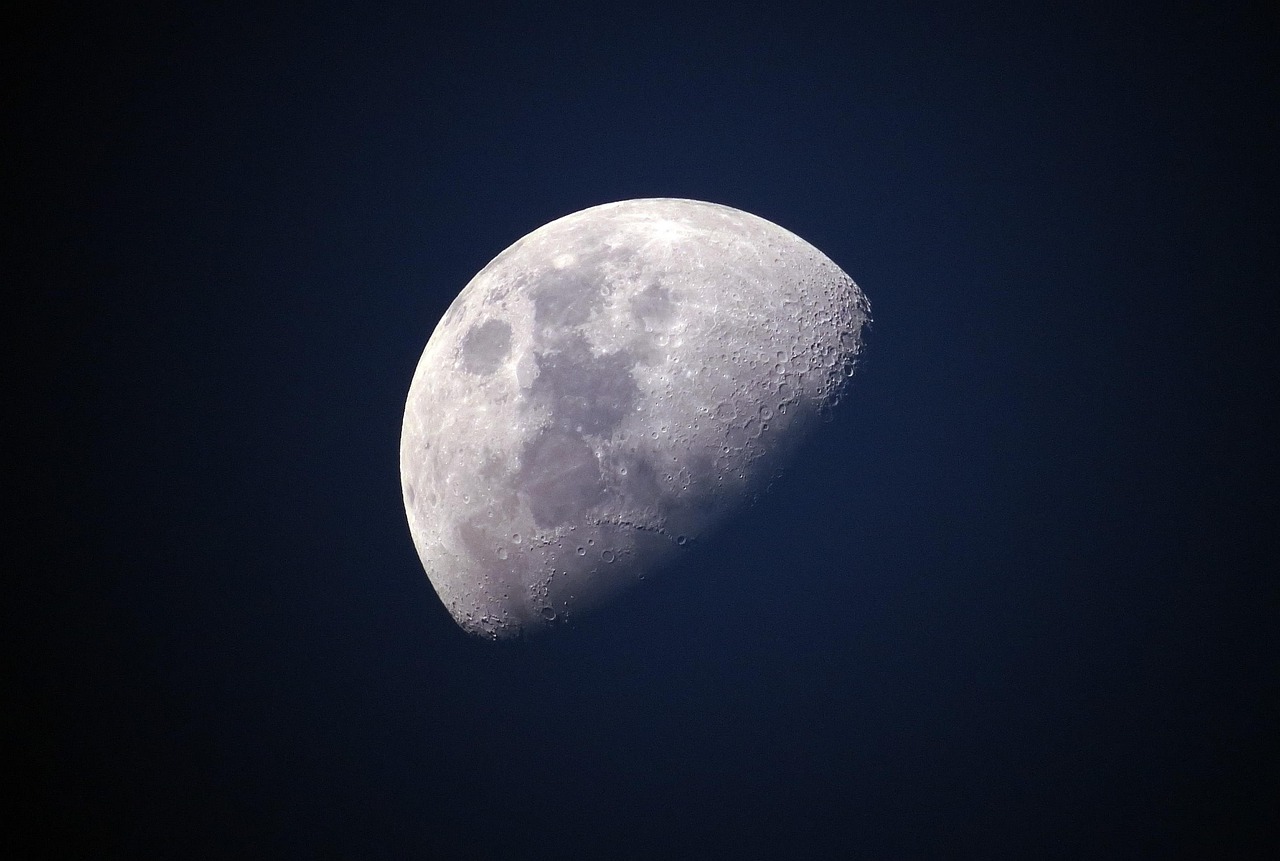
The Moon may eventually need its own time zone—but not because astronauts will need to know when to take lunch. It needs a shared time standard because clocks on the lunar surface do not tick at precisely the same rate as clocks on Earth, and the difference matters when spacecraft, landers, rovers, relay satellites and ground stations must agree on exactly when and where something happened.
For a person living on Earth, the discrepancy is invisible. For a navigation system trying to guide a vehicle through a lunar landing sequence, however, timing is position. A radio signal travels at the speed of light; even a small mismatch between clocks can translate into an error in the estimated distance between a spacecraft and a transmitter. As lunar exploration changes from occasional missions into a more crowded network of public and commercial activity, lunar timekeeping becomes basic infrastructure.
This does not mean the Moon needs a familiar civil “Moon time zone” with mornings, evenings and a 24-hour day. Its day-and-night cycle is roughly a month long, and future communities may adopt work schedules that are practical rather than astronomical. What engineers need first is more fundamental: a coordinated, precise reference time that can support navigation, communications and science while remaining reliably connected to terrestrial time systems.
Why clocks tick differently on the Moon
The central issue comes from Einstein’s relativity. Time is not an entirely universal background against which events unfold. The rate at which a clock runs depends, among other things, on gravity and motion.
In a stronger gravitational field, clocks run more slowly relative to clocks farther from that field. Earth has much more mass than the Moon, so its gravitational field is stronger near the surface. A clock on the Moon therefore tends to run faster than a comparable clock on Earth. Motion also affects clock rates: a clock moving faster relative to a chosen reference frame runs more slowly. The Earth-Moon system is in constant motion, and a full calculation must account for both gravitational and velocity-related effects, as well as the reference frame being used.
For a clock on the lunar surface, the net result is expected to be a gain of roughly tens of microseconds per day relative to a clock on Earth. A figure of about 58.7 microseconds per day has been widely cited in work associated with the United States’ plans for Coordinated Lunar Time. That number is not a universal property of every conceivable lunar clock comparison: precise values depend on how the reference time scale is defined and modeled. But the direction and practical conclusion are clear. Left uncorrected, clocks tied to the Moon and clocks tied to Earth will gradually separate.
That is not speculative science fiction. Relativistic corrections are already routine in technologies closer to home. Satellite navigation systems must account for the fact that their clocks experience different gravity and motion than clocks on Earth’s surface. Without such corrections, positioning services would rapidly become inaccurate. Lunar operations require the same intellectual discipline, though in a different environment and with different engineering constraints.
A tiny drift can become a large operational error
Microseconds sound trivial. In ordinary conversation, they are. In radio navigation, they are not.
Light travels about 300 metres in one microsecond. Navigation systems do not simply turn a clock error into a one-to-one location error—the outcome depends on the number of signals, the geometry of transmitters and receivers, signal-processing methods, and whether systems are estimating time and position together. Still, the relationship explains why timing precision is indispensable. A growing difference between reference clocks can corrupt range measurements, undermine position estimates and complicate the reconstruction of events after an anomaly.
Not every lunar activity needs the same degree of accuracy. A camera taking a broad landscape image can tolerate looser timing than a precision laser-ranging experiment. A slow rover may use terrain maps and local sensors for much of its movement, while an autonomous lander has more demanding requirements during descent. Communications networks, satellite tracking, scientific instruments and navigation services all have their own error budgets. The point is not that every system must share one extreme level of precision. It is that they need an agreed way to state, distribute and convert time accurately enough for their purpose.
Earth-Moon communication delays make this more important. A one-way radio signal between Earth and the Moon typically takes around 1.3 seconds, although the exact delay changes as the distance between them changes. That delay does not prevent synchronization, but it means that Earth cannot operate every lunar device as though it were a nearby machine. Systems must account for transmission time, execute commands autonomously when necessary and maintain reliable local clocks between updates.
Coordinated lunar time is not a 24-hour Moon clock
It is tempting to frame the subject as a question of whether lunar settlers will use “Moon Standard Time.” That is a useful headline, but it can obscure the technical problem. A coordinated lunar time system would be closer in spirit to a reference used by scientific and navigation networks than to the time displayed on a wristwatch.
On Earth, Coordinated Universal Time, or UTC, provides a common civil standard. It is produced from atomic clocks and kept in a defined relationship with Earth’s rotation. Satellite-navigation systems use their own system times, which are carefully related to UTC but are not identical to it. The lesson is not that the Moon should copy any one terrestrial standard. It is that modern infrastructure works because time scales have definitions, realization methods, conversion rules and institutions responsible for maintaining them.
A lunar standard would similarly need several layers:
- A defined reference: a mathematical description of what lunar time means and the relativistic framework used to calculate it.
- A physical realization: dependable clocks, likely including atomic clocks, that make the reference usable in real operations.
- Distribution: radio links, relay satellites, surface systems or other methods for sharing time across lunar operations.
- Conversion: published methods for relating lunar time to Earth-based scales and, eventually, to other space-based reference systems.
- Traceability and maintenance: procedures for checking clock performance, resolving discrepancies and preserving a reliable historical record.
That framework would help a rover identify the timing of a hazard report, a relay satellite schedule transmissions, and a science team compare measurements made by instruments operated by different organizations. It is less about declaring that the Moon is five hours ahead of London than about ensuring that a timestamp has the same technical meaning to everyone who uses it.
How lunar missions manage time today
Current lunar missions can work without a permanent lunar public utility because they are generally designed and operated as individual projects. A spacecraft carries an onboard clock. Mission control keeps time using terrestrial standards and sends commands based on predicted trajectories and communications delays. Ground networks measure radio signals to estimate a spacecraft’s range and velocity. The data are combined with orbit models, spacecraft telemetry and, in some cases, onboard sensors.
NASA’s Deep Space Network is one prominent example of the Earth-based infrastructure used to communicate with and track distant spacecraft. Its measurements and highly stable timing support interplanetary missions, including missions operating near or at the Moon. Other agencies maintain their own deep-space communications capabilities. Lunar spacecraft can also use optical navigation, star trackers, inertial sensors, terrain-relative navigation and communications with orbiters, depending on their design.
This mission-by-mission approach is effective when a small number of operators control the relevant systems. It becomes harder when many missions need to interoperate. If separate landers, rovers and communications services all rely on independently maintained timing conventions, every connection requires translation, coordination and testing. A common foundation reduces that friction. It also makes it easier for a new mission to use services that already exist rather than building an entire timing and tracking architecture from scratch.
The infrastructure lunar time would make possible
Timekeeping sits underneath many of the systems often described as Moon infrastructure. It would not replace local sensors or skilled operators. It would make networks of machines more coherent.
Lunar navigation and positioning
A future lunar navigation service could resemble terrestrial satellite navigation in broad function: transmitters with known locations and accurate clocks would allow receivers to infer where they are. The final architecture remains unsettled. It could involve lunar-orbit satellites, surface beacons, crosslinks between spacecraft, or a combination of these technologies. Different regions of the Moon, especially rugged terrain and polar areas, may require different approaches.
Whatever the design, accurate clocks are central. A receiver estimates signal travel times by comparing when a signal was transmitted with when it arrived. If the transmitter clocks, receiver clocks and reference time are not properly managed, the position solution degrades.
Landings, rovers and autonomy
Landing is among the most time-sensitive phases of a lunar mission. Vehicles must combine inertial measurements, terrain information, engine performance and communications data while making rapid decisions. A shared timing standard would not fly a lander by itself, but it could support consistent exchanges among navigation aids, relay systems and mission operations.
Rovers also benefit as they become more independent. A vehicle working beyond direct line of sight from Earth may need to coordinate with an orbiter, another rover, a charging station or a local beacon network. Shared timestamps help machines combine observations and understand the sequence of events without repeatedly asking Earth to arbitrate.
Communications and scientific observations
Networks allocate time as well as radio spectrum. Satellites and ground assets need scheduled windows to send data, receive commands and avoid interference. A common reference can make those handoffs more reliable, particularly if multiple organizations share relay services.
Scientific work depends on timing too. Instruments measuring radiation, seismic activity, dust, plasma or astronomical signals often need to correlate observations with other instruments. For some experiments, the exact standard and stability requirements will be unusually strict; for others, a well-documented timestamp may be sufficient. A coordinated lunar reference would make such data easier to compare across missions and over long periods.
Putting a clock network on the Moon is an engineering problem
Defining a time scale on paper is easier than making it available at a lunar outpost, on the far side of the Moon or inside a rover operating through long lunar nights. The Moon has no global communications network, no equivalent of terrestrial fiber infrastructure and no dense constellation of navigation satellites already in place.
Atomic clocks are likely to play an important role because they provide stable time references. But clocks still require calibration, monitoring and a way to distribute their timing information. Signals must travel through a changing Earth-Moon geometry, and lunar orbiters may pass behind the Moon or lose line of sight to particular locations. Surface equipment must survive large temperature swings, radiation, dust and power limitations.
A mature system could use multiple clocks and multiple transmission paths rather than depending on a single master device. It might compare clocks on Earth, in lunar orbit and on the surface, using two-way time-transfer techniques to measure and correct differences. Local systems could maintain their own time during a communications interruption, then reconcile with the wider network when contact returns. The details will depend on the services that are actually deployed.
Relativity would be part of the design, not an afterthought. Engineers would need to specify which coordinate frame applies, how gravitational potentials are modeled and how corrections are represented in software and data products. The goal is not to make users think about general relativity every time they send a command. It is to embed the physics consistently enough that systems can trust the timestamps they exchange.
NASA’s role—and why agreement matters
In 2024, the White House Office of Science and Technology Policy directed NASA to develop a strategy for a Coordinated Lunar Time standard by the end of 2026, in coordination with other U.S. agencies and international partners. The directive recognized that lunar operations will need a time reference designed for the Moon’s environment and usable by an expanding set of participants.
That direction should not be confused with a fully deployed, universally adopted lunar clock system. Establishing a standard involves technical work, testing, international consultation and choices about governance. International scientific and metrology organizations have long provided frameworks relevant to time scales, reference systems and atomic time. Their involvement, along with that of national space agencies and commercial operators, will matter if lunar time is to become genuinely interoperable rather than merely one organization’s internal convention.
Governance may sound abstract, but it determines whether infrastructure is trusted. Who maintains the reference? How are updates announced? What happens if two clock realizations diverge? Which data formats are open? Can a small mission access the service? How are historical timestamps preserved when standards improve? Terrestrial timekeeping has institutions and procedures for these questions. Lunar activity will need comparable arrangements, adapted to a more distributed and international environment.
Precision time and human time can coexist
A technical lunar reference does not dictate how people should organize life on the Moon. Future crews may work on schedules synchronized with Earth-based support teams, especially in the early years. A settlement might later choose routines based on power availability, habitat lighting, shift work, local safety rules or a calendar designed around operational needs. None of those choices requires a lunar “day” to resemble an Earth day.
This distinction is familiar on Earth. UTC coordinates global systems, but people use local time zones, calendars and social schedules. Lunar civil time could develop in similarly practical ways while navigation and communications continue to rely on a precise underlying standard. The two systems would be related, but they would serve different jobs.
The Moon is becoming a networked place
The need for lunar timekeeping signals a broader transition in spaceflight. For decades, many missions were isolated expeditions: a spacecraft launched, completed a narrow objective and communicated with its own ground team. The Moon is increasingly being approached as a place where many systems may operate together over time—landers near scientific sites, orbital relays, robotic logistics, instruments, power systems and eventually human habitats.
That kind of activity depends on standards that are largely invisible when they work well. On Earth, GPS signals, internet protocols, electrical grids and UTC rarely receive the same attention as vehicles or buildings, yet they make modern coordination possible. The equivalent lunar systems will be less familiar and much harder to build, because they must work across space, under extreme environmental constraints and in a setting with no single global authority.
The first durable piece of Moon infrastructure may therefore be neither a habitat nor a launch vehicle. It may be a shared technical answer to a deceptively simple question: what time did this happen? Once many machines can answer that question consistently, they will be far better able to answer the next one—where, exactly, are we?