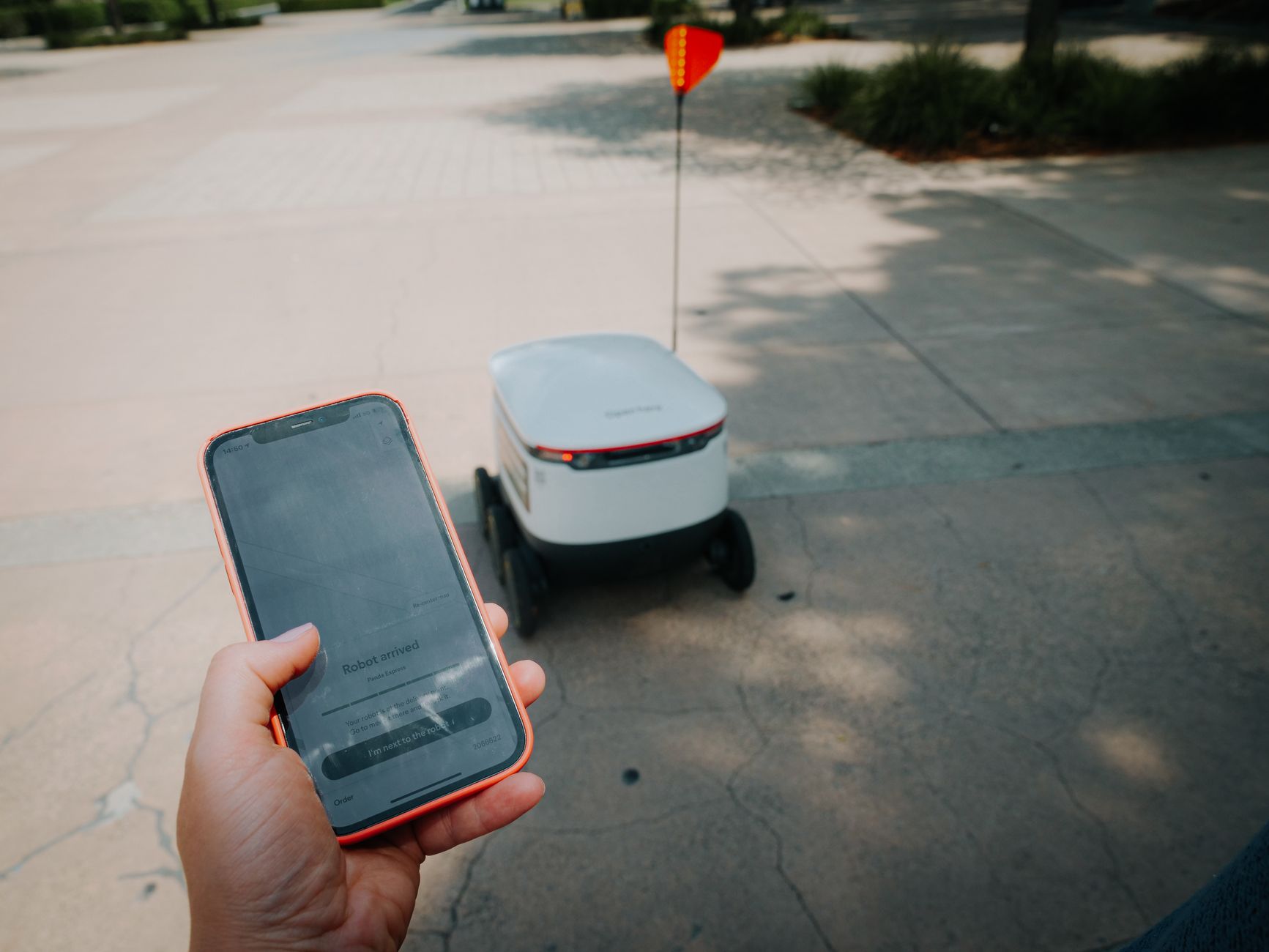
The next important AI interface may not look like an interface at all. Rather than opening a chatbot, typing a prompt or switching between apps, people may increasingly encounter AI through headphones, cars, home devices, workplace software and wearables.
This emerging model is often called ambient AI: AI that is embedded in everyday devices and can respond to context when a person needs help. Context might include a spoken request, the time of day, an ongoing task, a device setting or preferences the user has explicitly saved.
The goal is not to make every connected object autonomous. It is to reduce the effort required to use technology by making assistance available through the device or environment already in use. That promise also creates a trade-off: systems that understand more about their surroundings may collect more information about the people in them.
What ambient AI means
Ambient AI is not a tightly standardized technical term. It overlaps with labels such as context-aware computing, proactive assistance and embedded artificial intelligence. The underlying idea predates the current wave of generative AI.
In the late 1980s, computer scientist Mark Weiser wrote about “ubiquitous computing” at Xerox PARC: computing woven into daily life rather than limited to a desktop computer. Researchers later developed context-aware computing, which examines how systems can use information about a user’s situation, including location, activity, nearby devices and time. “Ambient intelligence” also became a significant term in European technology research and policy discussions in the early 2000s.
Generative AI adds a more flexible language interface to these older ideas. A conventional app generally waits to be opened and directed. An ambient system may be able to use available context to offer a relevant interaction while someone is driving, cooking, walking through an airport or joining a meeting.
A smart speaker that sets a timer on request is not necessarily ambient AI. A system that can connect a timer to a recipe, a calendar reminder, a nearby display and an accessibility preference is closer to the concept—if it does so reliably and with meaningful permission.
From smartphone apps to connected surroundings
Smartphones are likely to remain central to digital life. But they increasingly function as one device within a wider personal computing environment. Watches can detect movement and other signals. Earbuds offer hands-free voice interfaces. Cars combine navigation, microphones, cameras and vehicle data. Home devices can respond to lighting, temperature, occupancy or security events.
AI features are appearing across these categories. Phones and computers increasingly include on-device tools for writing, images and voice. Camera-equipped wearables and AI-enabled glasses make speech-and-image interactions possible in public spaces. Vehicle systems are expanding voice controls and in-cabin assistants. Workplace software can transcribe meetings, summarize discussions and help organize follow-up tasks.
These products do not yet form one seamless ambient network. Most are separate services with different accounts, permissions and technical constraints. Some features are limited by connectivity, regional availability or device hardware. Still, the broader direction is clear: AI is moving from a destination people visit to a layer that can accompany activities across devices.
Why context can make AI assistants more useful
Context can turn a generic response into useful assistance. If someone asks, “When do I need to leave?” an assistant may need a destination, calendar details, travel conditions and an intended arrival time. If a user says, “Turn that off,” the system needs to determine which nearby device “that” means.
Useful context can include:
- Timing: whether a task is urgent, routine or scheduled for later.
- Place: whether someone is at home, in a vehicle, at work or in public.
- Activity: whether the person is driving, exercising, cooking or in a meeting.
- Device state: battery level, connectivity, nearby equipment and current settings.
- User preferences: accessibility needs, notification choices, routines and information intentionally saved by the user.
In a well-designed system, this can reduce friction. Navigation may use simpler prompts while a driver is in demanding traffic. A wearable may provide a discreet reminder during a meeting. A home system may notify a household that a door is open after everyone appears to have left.
Context, however, is imperfect. Location data can be inaccurate, microphones can misunderstand speech and calendar entries can fail to reflect changed plans. A system that seems considerate when it interprets context correctly can feel intrusive or unreliable when it does not.
The technology behind an “invisible” assistant
Ambient AI depends on several technologies working together: microphones, cameras, motion sensors, location services, wireless connections, operating systems and machine-learning models. A generative model is only one part of the system. The software must also decide which signals matter, where they should be processed and whether it has permission to act.
Some tasks can happen directly on a device. On-device processing can be faster, may work with limited connectivity and can reduce the amount of data sent elsewhere. Wake-word detection on voice devices, for example, has commonly been handled locally. Newer phones and computers can also run some AI functions on their own hardware.
Other tasks rely on remote servers, particularly when they require larger models or current online information. Many products use a hybrid approach in which devices handle certain requests locally and send more demanding tasks to cloud services. That approach does not remove privacy concerns. Users still need to understand what data leaves the device, why it is sent, who may access it and how long it is retained.
Hardware limits also matter. Always-on sensing uses battery power. Cameras and microphones increase processing demands. Wireless connections can fail, and cloud responses can introduce delay. Assistance has to arrive quickly enough to be useful in the moment.
Why companies are pursuing fewer app boundaries
For technology companies, ambient AI can make services more present in daily routines. A standalone app competes for attention on a crowded screen. An assistant available through a watch, car display, earbuds or home device may be used in more situations.
It can also create reasons to buy and remain within a connected hardware ecosystem. Phones, laptops, smart-home hubs, glasses and headphones may become more useful when their sensors and software work together.
Integration is not automatically a consumer benefit. A system tied closely to one company’s account, subscription and hardware can make switching harder. Interoperability—the ability of products from different makers to work together—will help determine whether ambient AI feels like a convenience or a new form of lock-in.
Where ambient AI could help
The most practical uses are likely to be narrow and situational rather than dramatic. Accessibility is an important example. Voice controls, screen readers, live captions, sound recognition and camera-based descriptions can help people navigate digital and physical environments without relying entirely on a keyboard or screen.
Other potential uses include household coordination, reminders linked to routines, translation, navigation support and meeting assistance. A worker may receive a meeting summary and assigned actions. A caregiver may use shared reminders to coordinate routines, subject to safeguards appropriate to sensitive information. A traveller may ask for directions through an earbud rather than repeatedly checking a phone.
Commercially available systems remain more limited than the broad vision suggests. They can often summarize, transcribe, answer questions, identify some objects and automate selected routines. They may struggle with ambiguity, unusual conditions and tasks that require dependable judgment. That makes ambient AI better suited to assistance than unsupervised decisions in high-stakes settings.
Privacy, consent and control
An AI system cannot respond to its surroundings without receiving some information about them. That is the central tension of ambient AI: richer context may improve usefulness, but it can also increase the risk of collecting information that people did not intend to share.
The issue extends beyond the device owner. A camera-equipped wearable may capture bystanders. A smart speaker may pick up a visitor’s voice. Workplace tools may record conversations involving employees, contractors or clients. People in these situations may not know which service is involved, what data practices apply or whether they have a practical way to object.
Legal requirements vary by jurisdiction. Data-protection rules, audio-recording laws, workplace-monitoring rules and biometric-data requirements may all be relevant depending on the product and setting. The European Union’s General Data Protection Regulation, for example, imposes obligations on organizations handling personal data, while the EU AI Act introduces requirements for some AI systems on a phased timetable.
Compliance alone is not enough. A lengthy privacy policy cannot replace a clear recording indicator or a simple way to stop collection. Privacy and AI need to be product-design questions, not only legal disclosures.
Ambient systems can fail differently from chatbots
A chatbot’s error is usually visible on a screen. Ambient AI can fail by acting at the wrong moment, interrupting someone, misidentifying a person or drawing an inappropriate conclusion from incomplete signals. Because these systems are designed to fade into the background, their errors may be less obvious.
People need to know when a system is active, understand what information it is using, correct it and turn it off. Responsible design should include visible recording indicators, physical controls where possible, understandable permission settings, activity histories and straightforward deletion tools.
Local processing, short retention periods and useful offline modes can reduce exposure, although none is a universal solution. In sensitive settings, the most responsible choice may be not to use ambient sensing at all.
A gradual shift in the future of computing
Ambient AI is unlikely to arrive as a single breakthrough or replace smartphones overnight. Its development will be uneven, shaped by battery life, network coverage, price, regulation, consumer trust and the fact that people do not always want technology to anticipate them.
Some useful features may become routine enough that they are no longer described as AI: better captions, more natural dictation, improved navigation and less cumbersome accessibility tools. Other ambitions may face resistance if they require constant monitoring or make ordinary social spaces feel permanently recorded.
The most successful ambient AI systems will not simply collect the most information. They will be reliably useful, restrained in what they gather, clear about when they are active and easy to refuse. As computing extends into homes, workplaces and public spaces, those qualities will matter as much as technical capability.