A robot that pauses to ask a useful question may be more capable than one that confidently completes the wrong task. In the real world, the most consequential failures are often not dramatic mechanical breakdowns. They are quiet mistakes: delivering an item to the wrong person, treating an uncertain map as fact, mishandling an unfamiliar object, or continuing a workflow after a crucial detail has changed.
That is why robot uncertainty is becoming central to the practical future of robotics. As machines leave carefully arranged demonstrations and enter homes, hospitals, warehouses and public spaces, they will encounter ambiguity that no fixed set of rules or training examples can fully eliminate. A dependable robot must do more than act. It must recognize when it does not know enough, decide what kind of assistance it needs, and hand a problem to a person in a way that is timely and understandable.
The goal is not to make people permanent babysitters for supposedly autonomous machines. It is to design human-robot interaction so that human judgment is used at the moments where it adds the most value. The best robot may not be the one that needs no help. It may be the one that asks for the right help before uncertainty becomes harm.
Autonomy is not the same as competence
Robot autonomy is often described as a sliding scale: a machine is more autonomous when it can perform more work without direct human commands. That is useful, but incomplete. A robot can execute a sequence of actions without being competent in the broader sense people expect.
Competence involves at least three distinct abilities:
- Performing an action: moving through a corridor, picking up an object or following a delivery route.
- Checking the result: determining whether the action actually achieved the intended outcome.
- Recognizing the limits of its knowledge: identifying when its sensors, model or instructions are insufficient to make a reliable decision.
The first ability is often the most visible in robotics demonstrations. The third is frequently the harder one. A warehouse robot might be able to grasp thousands of known items, for example, but still be unsure whether a damaged package is safe to handle. A home robot could identify a cup on a table while remaining unable to infer whether it belongs to a visitor, whether it contains medication, or whether moving it would violate an unspoken household rule.
These are not merely edge cases. Real environments are made of edge cases. They contain occlusions, clutter, changing layouts, unusual objects, conflicting instructions and social meanings that are rarely stated explicitly. Sensors provide incomplete views of the world; machine-learning systems generalize imperfectly; and human language routinely leaves out details that people assume others will understand.
A robot that acts without recognizing these gaps can appear autonomous while being dangerously brittle. A robot that can say, in effect, “I cannot determine which of these two objects you mean” is displaying a more useful kind of intelligence.
Why robot uncertainty is unavoidable
Robots make decisions from imperfect evidence. Cameras can be affected by lighting, reflections and blocked views. Depth sensors can struggle with certain materials or narrow spaces. Maps become stale. Object-recognition systems may assign labels to unfamiliar things because many statistical models are built to choose among known categories, even when none is fully appropriate.
Uncertainty also exists at higher levels than perception. A robot may see an object clearly but misunderstand the task. “Put this away” could mean placing it in a cupboard, returning it to its owner, disposing of it, or moving it out of sight. In a hospital, an instruction to deliver supplies may need to be reconciled with infection-control procedures, patient privacy, access restrictions and a changing care schedule.
Researchers address these problems through methods broadly described as uncertainty estimation, confidence calibration, active perception and interactive task learning. The terms matter because a system’s apparent confidence is not necessarily a reliable measure of correctness. A model can produce a highly decisive answer even in a situation unlike those it encountered during development.
Calibration is the difficult discipline of making a system’s confidence correspond, as closely as possible, to its actual likelihood of being right. If a robot reports high confidence, people should generally have reason to expect good performance; if it reports low confidence, they should understand that intervention may be warranted. Perfect calibration is unrealistic in open environments, but systems can be designed to detect unfamiliar conditions, compare competing interpretations and seek more information before acting.
That may mean moving its camera for a better view, checking a barcode, consulting an updated map, or asking a person a short clarification question. In many cases, asking is not a failure of autonomy. It is a form of active perception: the robot is obtaining information needed to proceed safely.
The hidden cost of overconfident machines
When a robot is visibly uncertain, people may find it frustrating. When it is silently wrong, the cost can be much higher. In warehouses, an incorrect pick can create rework, inventory errors and delayed shipments. In public-facing settings, a navigation error can obstruct people or lead a machine into restricted space. In healthcare, even low-risk support tasks require careful attention to workflow, hygiene, identification and escalation.
At home, the consequences may be socially rather than physically severe, but they still matter. A domestic robot that opens the wrong cabinet, records more than a household expects, moves a personal item or makes assumptions about a person’s needs can quickly lose trust. The home is not a standardized workcell. It is a place shaped by privacy, relationships, changing routines and tacit preferences.
The danger is compounded by a well-known human tendency: people can over-rely on systems that appear fluent, confident or authoritative. Automation bias describes the risk that users accept a system’s recommendation while giving too little attention to contrary evidence. The opposite problem can also arise. If a machine raises too many vague warnings, people learn to dismiss them, much as drivers may become desensitized to frequent alerts.
Neither blind trust nor constant skepticism is a workable operating model. What robotics needs is calibrated trust: users should know what the system is designed to do, when it is likely to need assistance, and how to intervene without guessing.
What it means when robots ask for help
“Robots asking for help” can sound like a single behavior, but it covers several very different actions. Good design starts by separating them.
- Requesting information: The robot lacks a fact needed to continue. “Which package should be delivered first?” or “Is this the item you meant?”
- Requesting clarification: The instruction is ambiguous or conflicts with another instruction. “Should I clean this spill now, or avoid the area until staff arrive?”
- Requesting permission: The action is possible but has consequences a person should approve. “May I enter this room?” or “Should I discard this damaged item?”
- Escalating a safety concern: The robot detects a condition outside its operating limits, such as an obstructed route, an unstable object or an unexpected person in a hazardous area.
- Transferring control: The robot cannot safely continue and needs a person to take over remotely, physically, or through a constrained supervisory interface.
These requests carry different levels of urgency and should not be presented in the same way. A question about task preference can wait. A potential collision or hazardous condition may require the robot to stop, move to a safe state and notify an appropriate person immediately.
Crucially, a handoff should not become an unstructured plea for rescue. “Error: unable to proceed” tells a user almost nothing. A more useful system identifies what it observed, what it cannot resolve, what it has already tried, and what options are available. That is the practical value of explainable robotics: not a lengthy technical account of every internal calculation, but an explanation sufficient for a person to make an informed next decision.
Designing an interruption people can use
A robot’s request for help is itself a design problem. It arrives in the middle of someone’s work, care duties, commute or home life. Poorly timed interruptions can be burdensome; unclear ones can be unsafe. The robot needs to manage attention as carefully as it manages motion.
Useful requests typically answer a small set of questions:
- What happened? State the observed issue in plain language.
- Why does it matter now? Explain the consequence of waiting, proceeding or choosing incorrectly.
- What does the robot need? Ask for a specific decision, confirmation or action.
- What are the reasonable options? Offer a limited set where possible, including a safe default.
- What will happen if nobody responds? Make the fallback behavior clear.
Consider the difference between an alert reading “Navigation failure” and one that communicates: “The usual route is blocked by a cart. I can wait, take a longer accessible route, or return to the pickup point.” The second message turns a technical failure into an understandable operational decision.
Context is as important as wording. A remote supervisor may need an image, map view or recent task history. A worker standing near the machine may only need a simple visual signal and a concise prompt. The interface should reveal enough evidence to support judgment without demanding that every user become a robotics expert.
The robot should also avoid asking questions it can answer cheaply on its own. If it can obtain a better camera angle, re-scan a label or compare a location with an up-to-date inventory record, it should often do that first. Human attention is a scarce resource. Escalation should be purposeful, not a substitute for basic error handling.
Shared control is more useful than a false choice
The usual debate frames the future as a choice between fully autonomous robots and human-operated tools. In practice, many effective systems use shared control robotics: the machine handles routine, time-sensitive or physically demanding parts of a task, while people retain authority over goals, exceptions and high-consequence decisions.
Control can be divided at several levels. A mobile robot may navigate independently along approved routes but request approval before crossing a new threshold. A robotic arm may stabilize its motion and prevent unsafe movements while an operator selects the object and final placement. A care-support system may perform a scheduled delivery while staff decide whether the timing remains clinically appropriate.
This division is not static. A robot may be highly autonomous in a familiar corridor and much less autonomous in a crowded lobby. It may be capable of picking a standard container but require oversight for a leaking, damaged or unknown one. Good robot decision-making is therefore not simply about selecting an action; it is about selecting the appropriate level of independence for the situation.
Supervisory control has long been used in industrial automation, aviation and other complex technical settings. These fields offer useful lessons, though robots cannot copy them wholesale. Aviation checklists, alarm systems and escalation procedures exist within highly regulated organizations, with specialized training and clear roles. A consumer robot in a kitchen cannot assume the same discipline, attention or shared vocabulary.
Still, the underlying principles travel well: make abnormal conditions distinguishable from routine ones; prioritize alerts; provide clear procedures for handoffs; avoid burying critical information among low-value notifications; and record important actions and overrides so that failures can be understood later.
Safety is also an organizational responsibility
Robot safety is often discussed in terms of sensors, emergency stops, speed limits and collision avoidance. Those safeguards are essential, particularly when robots work near people. Standards for industrial and collaborative robots, including the ISO 10218 series and ISO/TS 15066, have helped establish approaches to risk assessment, protective measures and collaborative operation. But safe behavior also depends on what happens when the robot reaches the edge of its capabilities.
Who receives an escalation? How quickly must they respond? What is the safe state if no one answers? Who can override the machine, and under what conditions? How is a decision recorded? These questions cannot be left to an interface designer alone. They are matters of staffing, training, governance and accountability.
In a warehouse, a business may designate supervisors for particular robot zones and establish procedures for blocked routes or damaged goods. In a hospital, the authority to approve a task may depend on clinical role, patient context and local policy. In a home, the responsible person may not be available at all, which makes conservative defaults especially important.
Organizations should resist treating human oversight as a vague safety net. If a system depends on timely intervention, the intervention must be realistically achievable. A robot that can summon help only from a worker already responsible for too many machines has not solved its uncertainty problem; it has transferred it.
Why homes expose the limits of robot autonomy
Homes are among the hardest environments for robots precisely because they seem ordinary. They are full of irregular surfaces, narrow passages, pets, children, visitors, temporary clutter and objects that may look similar while carrying very different meaning. A medicine bottle, a decorative container and a personal item may all be easy to identify visually yet inappropriate to move without context.
Domestic tasks also involve priorities that cannot be inferred from geometry alone. Is it more important to finish cleaning the floor or avoid making noise while someone sleeps? Can the robot enter a bedroom? Should it alert a family member when it encounters a fall hazard, or is that observation itself sensitive? Who is allowed to approve access to a cupboard, camera feed or stored map?
These are questions of consent, privacy and social boundaries as much as technical capability. A domestic robot should be designed to ask for preferences early, remember only what it is authorized to retain, and make it easy for people to revise rules. It should not treat a lack of instruction as permission to improvise in sensitive spaces.
Evaluate recovery, not just completion
Robotics is often evaluated through success rates: how often a system grasps an object, reaches a destination or completes a task. Those measures are useful, but they can obscure the most important question for deployment: what happens when the expected conditions do not hold?
A mature evaluation of robot autonomy should include the quality of failure recovery. Did the robot detect a problem? Did it enter a safe state? Did it seek additional information before escalating? Did it ask a comprehensible question? Did it make the human’s decision easier? Did it learn an approved preference without silently expanding its authority?
It should also assess the burden placed on people. A system that completes most tasks but interrupts staff constantly may be less valuable than a somewhat slower one that resolves routine uncertainty independently and escalates only meaningful exceptions. Conversely, a robot that almost never asks for help may be concealing uncertainty rather than overcoming it.
The future standard should include good refusals as well as good performance. A robot should be able to say that a request is beyond its authorization, that it lacks sufficient confidence, or that it needs a person to inspect a condition. These are not signs of weakness. They are signs that the system is respecting the boundary between a calculated guess and a decision that deserves human judgment.
The dependable robot is not the one that pretends to be alone
Robots will become more capable at sensing, navigating, manipulating objects and learning from experience. Yet no realistic advance will remove uncertainty from the messy settings where people most want useful machines. The central challenge is not to eliminate human involvement, but to make it selective, legible and worthwhile.
The most dependable robot will know what it can do, what it cannot reliably infer and how to involve a person without creating a new problem. It will pause before an uncertain action becomes an irreversible one. It will explain the decision that needs to be made. It will offer safe options, preserve human authority where it matters, and recover gracefully when the world refuses to behave like a demonstration.
That is not a compromise on autonomy. It is the architecture of trust.
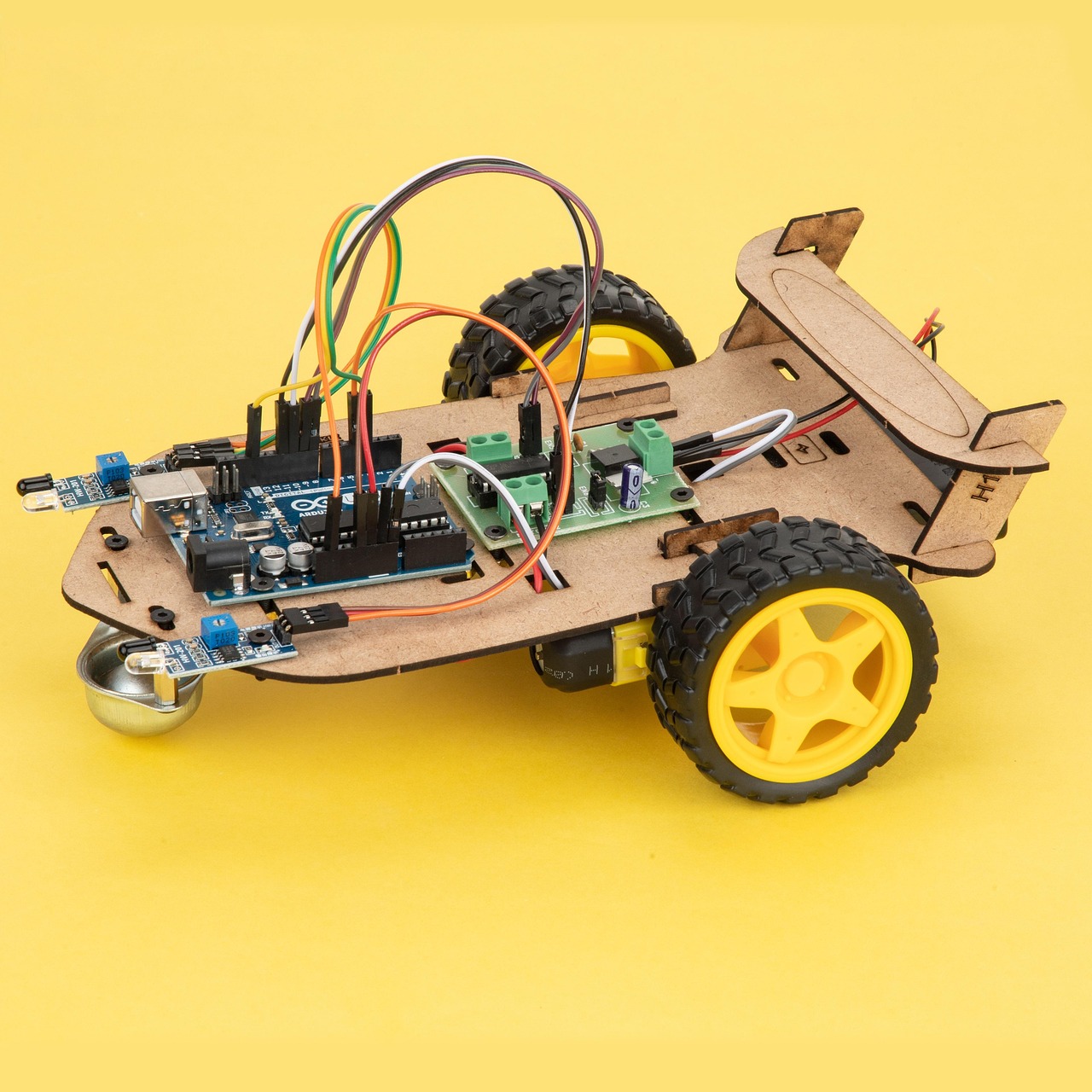
Image by Anilsharma26 on Pixabay.